China Pours 200 Trillion Won into Xiong'an 'Megacity' to Relieve Overcrowded Beijing
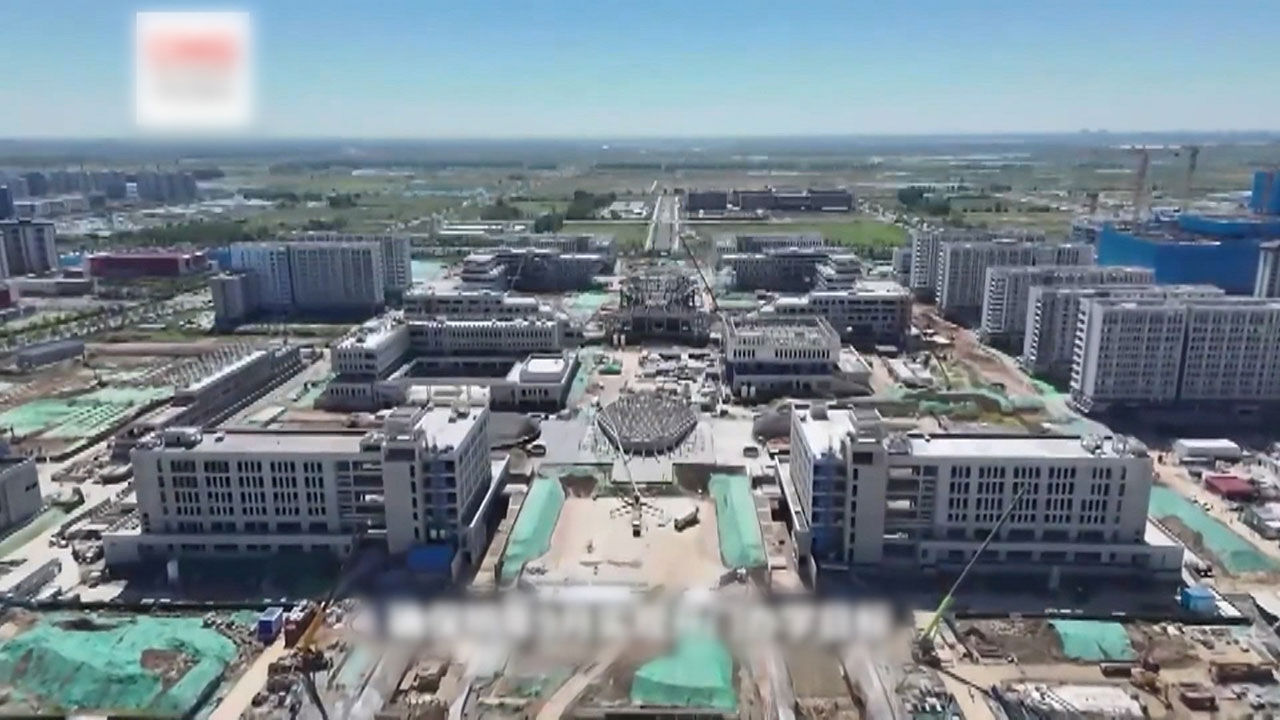
Key Points
- China has invested approximately 200 trillion won (around 1 trillion yuan) to build the Xiong'an New Area from scratch to ease severe overcrowding in Beijing.
- Korean media spotlighted the megacity's massive scale and high-tech infrastructure alongside its struggle to attract permanent residents due to inadequate schools and amenities.
- Spanning three times the size of Seoul, the zone is planned as a high-tech smart hub, yet faces the risk of becoming a commuter bed town unless family living conditions improve.
Summary China has poured roughly 1 trillion yuan (around 200 trillion Korean won, or over $140 billion USD) into constructing the Xiong'an New Area from barren ground since 2017, aiming to alleviate severe overcrowding in the capital of Beijing. Directly spearheaded by President Xi Jinping, this ambitious megaproject is designed as China's third major special economic zone, spanning 1,770 square kilometers—an area nearly three times the size of Seoul.
A firsthand look by South Korean correspondents revealed an evolving landscape filled with towering construction cranes, modern commercial and administrative complexes, eight-lane thoroughfares, and dedicated autonomous driving lanes. High-speed rail connections—known locally as *Gaotie*—are currently under construction, poised to link Xiong'an across Shaanxi Province all the way to Kunming. To date, only about 13% of the master-planned area has been developed, with future plans calling for an additional 800 trillion won investment to realize an eco-friendly smart metropolis featuring low-rise structures above ground and subterranean facilities orchestrated entirely through IoT and big data.
However, the ambitious initiative faces steep demographic hurdles. Despite targeting a population of 2.5 million, Xiong'an's current resident count stands at approximately 1.4 million. A persistent shortage of schools, quality educational infrastructure, and cultural amenities has discouraged families from permanently relocating. Although the central government has mandated the transfer of state-owned enterprise headquarters, prestigious universities, and major hospitals to the area, observers caution that without well-rounded, livable community conditions, Xiong'an risks becoming little more than a vast commuter bed town for Beijing.
Sponsored · Ad