'The Assassin(s)' Defies Political Firestorm to Lead Korean Box Office for Two Consecutive Months
Key Points
- Historical thriller 'The Assassin(s)' led the domestic Korean box office across both September and October, drawing over 3.46 million viewers and surpassing its break-even point.
- Despite accusations of historical distortion and protests by far-right civic groups, public curiosity propelled the film to 5 consecutive weeks at the top of the box office.
- Focusing on the 1974 assassination of South Korea's First Lady, the film reflects Korea's ongoing cinematic engagement with modern political history alongside international acclaim at festivals like T
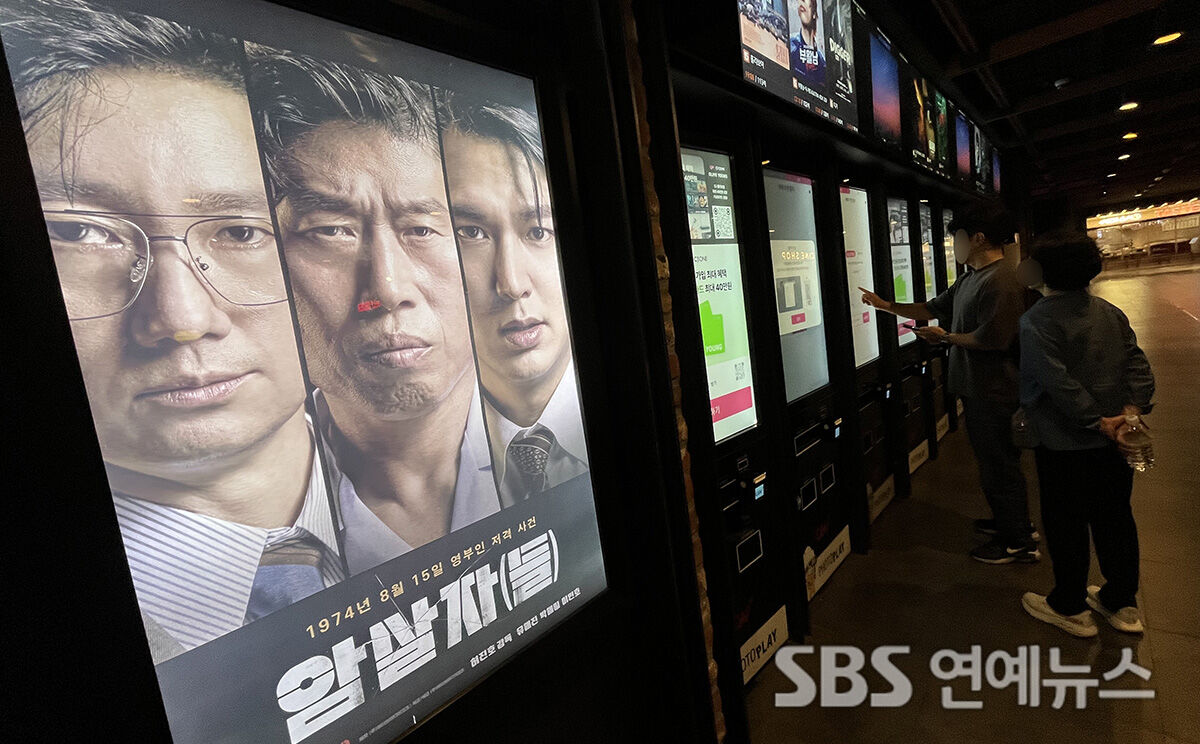
Summary Director Hur Jin-ho's historical thriller film 'The Assassin(s)' ('암살자(들)') has dominated the South Korean box office for two consecutive months, holding the No. 1 spot among domestic films throughout September and October. The film's impressive theatrical run came despite—and perhaps partly fueled by—intense political controversy and protests surrounding its sensitive subject matter.
According to data from the Korean Film Council (KOBIS), 'The Assassin(s)' drew 1,766,839 moviegoers in September and 1,665,928 in October. It ranked first among domestic releases and second across the entire overall box office for two months straight. Released on September 23, the film clinched the top monthly spot for domestic films in just eight days, commanding 40.3% of the domestic box office gross revenue in September and surging to 44.7% in October. In its opening week, it surpassed 1.5 million viewers within five days, crossed 3 million in 20 days, and secured its position among the top four highest-grossing Korean films of 2026. On October 29, cumulative ticket sales exceeded 3.4 million, officially passing its commercial break-even point and currently standing at 3.46 million viewers.
The narrative of 'The Assassin(s)' investigates the lingering suspicions and shadowy figures behind the historic August 15, 1974 assassination attempt on South Korean President Park Chung-hee, which tragically resulted in the death of First Lady Yuk Young-soo. In South Korea, modern historical cinema tackling authoritarian regimes and contentious political flashpoints frequently stirs heated ideological debates. From its first week of release, political factions leveled accusations of historical distortion against the film, while far-right civic groups staged protests outside theaters.
Rather than deterring potential moviegoers, the political firestorm ignited public curiosity, creating a nationwide sentiment of "I need to see it with my own eyes to judge." Audiences responded favorably to Hur Jin-ho's meticulous direction and gripping investigative pacing, supported by an acclaimed ensemble cast including Yoo Hae-jin, Park Hae-il, and Lee Min-ho.
The film has also achieved notable international traction on the global film festival circuit. It was named runner-up for the People's Choice Award at the 51st Toronto International Film Festival and received invitations to prominent festivals in Rio de Janeiro, Singapore, Hawaii, and Philadelphia. Notably, it served as the opening film for both the Singapore International Film Festival and the Paris Korean Film Festival, where tickets sold out entirely within three minutes of opening, demonstrating strong global enthusiasm for South Korean historical cinema.
Sponsored · Ad