North Korea May Replicate Russian Kamikaze Drone Factories Using Dispatched Workers, Report Warns
Key Points
- A joint report by CSIS and the Bush Institute reveals North Korean forced laborers are helping manufacture thousands of attack drones at Russia's Alabuga plant for the war in Ukraine.
- South Korean security analysts and officials warn that North Korean technicians are gaining vital manufacturing expertise that could allow Pyongyang to replicate mass drone assembly plants domesticall
- The deployment highlights both the expanding 'CRINK' (China, Russia, Iran, North Korea) authoritarian bloc and the persistent human rights abuses of state-directed labor exploitation to fund Pyongyang
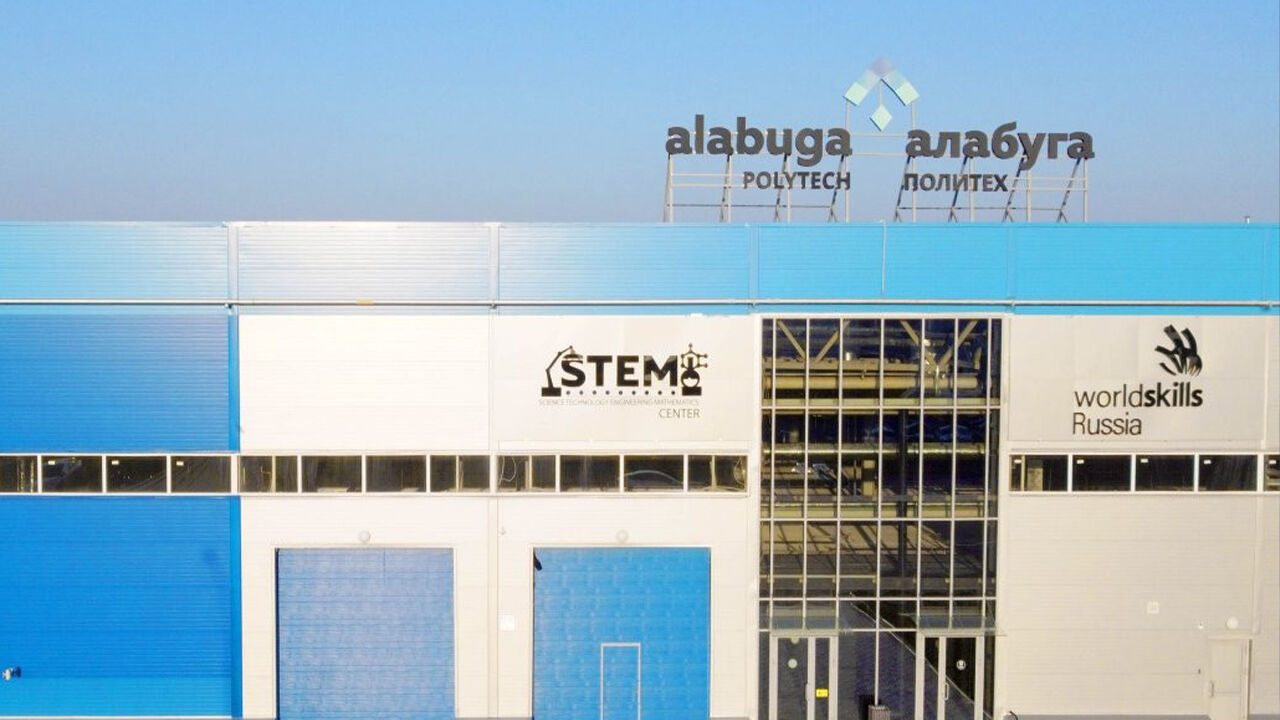
Summary A newly released joint report from prominent U.S. think tanks has shed light on an alarming convergence of military technology and state-sponsored forced labor. According to the Center for Strategic and International Studies (CSIS) and the George W. Bush Institute, North Korea has dispatched substantial numbers of workers to the Alabuga special economic zone in Tatarstan, Russia—roughly 900 kilometers east of Moscow—where thousands of Iranian-designed Shahed loitering munitions (kamikaze drones) are manufactured annually for use in the ongoing war in Ukraine.
The report details how the Alabuga facility represents a tangible manifestation of the emerging "CRINK" network—an acronym denoting deepening cooperation among China, Russia, Iran, and North Korea. Within this complex, Iranian technical schematics and Chinese components and financing are married with captive labor supplied by Pyongyang. Up to 12,000 workers staff the sprawling site, including young Russians lured under false pretenses of work-study programs and foreign recruits promised hospitality gigs. Among them, North Korean laborers face grueling conditions, with the Kim Jong Un regime seizing an estimated 90 percent of their earnings as a crucial conduit for illicit foreign currency.
Security analysts and South Korean observers warn that this arrangement poses a direct, evolving threat to stability on the Korean Peninsula. Technicians sent by Pyongyang are not merely providing manual assembly labor; they are actively absorbing production expertise, observing iterative battlefield modifications introduced by Russian engineers, and learning the operational dynamics of drone warfare. Victor Cha, Korea Chair at CSIS, emphasized that modernizing its own drone doctrine and manufacturing capacity is a primary strategic objective for North Korea's military-industrial complex. Former North Korean diplomat turned South Korean lawmaker Tae Yong-ho cautioned that Pyongyang could readily replicate an identical high-volume drone assembly plant on North Korean soil.
Beyond conventional military implications, the findings spotlight severe human rights violations. Experts characterize the deployment as state-sponsored human trafficking, noting that North Korean overseas laborers routinely have their passports confiscated, live in sealed dormitory compounds near production sites, and remain strictly segregated from outside information to prevent defection. As Russian infrastructure links expand across the Tumen River-Khasan border, experts urge Seoul, Washington, and the broader international community to implement targeted Magnitsky sanctions and enforce rigorous supply-chain prohibitions to counter this expanding authoritarian axis.
Sponsored · Ad