Tesla’s 'Flying' Roadster Reveals a Deeper Crisis: Are Western Automakers Losing the Mainstream EV War to China?
Key Points
- Tesla unveiled its next-generation Roadster hypercar featuring extreme stunts and a 0.81-second 0-to-60 mph acceleration time, but analysts see it as a symptom of ceding the mass-market EV sector.
- Korean news outlets highlighted analyses showing that Western giants like Tesla, Porsche, and Jaguar are being pushed into ultra-luxury niches as China's low-cost EVs capture mainstream global demand.
- Industry observers remain skeptical whether pivoting to boutique multi-million-dollar vehicles can sustain Western automakers against China's heavily subsidized, low-cost production powerhouse.
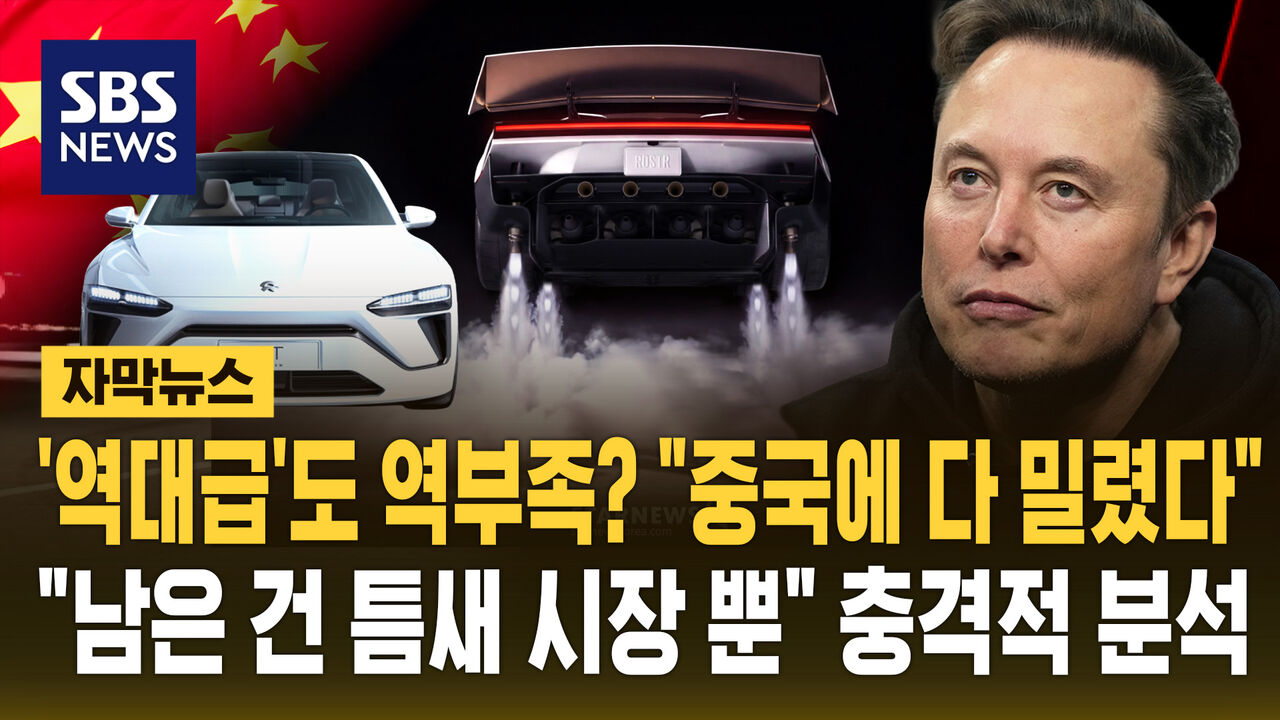
Summary Tesla's latest unveiling of its next-generation Roadster supercar—boasting sci-fi-level feats like jumping over five parked cars and accelerating from 0 to 97 km/h (60 mph) in just 0.81 seconds—has set off intense debate across international business desks and South Korean media alike. While the raw technical performance stunned automotive enthusiasts, prominent economic analysts and Korean broadcast commentators interpret this extreme launch as a symbolic admission of retreat rather than pure innovation.
Rather than dominating mass consumer adoption, Western electric vehicle pioneers are increasingly seen as being pushed into ultra-luxury niche territory. According to major international analyses cited by SBS, Elon Musk’s focus on surreal, ultra-high-end engineering underscores that Western automakers are struggling to compete against Chinese manufacturers in the mainstream EV market. Supported by Chinese government subsidies, low-interest state loans, discounted land and energy, and substantially lower domestic production costs, Chinese EV makers have flooded global roads with aggressively priced, accessible models that undercut Western counterparts.
This strategic retreat into ultra-luxury status symbols is not unique to Tesla. Traditional prestige European badges such as Germany's Porsche and Britain's Jaguar have also struggled with flagging sales across Greater China and responded by pivoting toward exorbitant, ultra-premium limited tiers. By moving upmarket into six-figure niches, Western legacy and EV brands hope to insulate their profit margins from China's price war. As automotive consultant Michael Dunne observed, Western automakers may soon be relegated entirely to boutique niche players if they cannot match China's relentless cost efficiency.
In South Korea, where the domestic auto market closely monitors EV price parity and battery supply chain shifts, this trend has sparked significant concern. Korean commentators note that while high-tech halo cars like the Roadster generate viral headlines, doubts remain over whether such hypercars can realistically hit mass production by 2028 or generate meaningful revenue. With mainstream consumers demanding affordable everyday mobility over flying sports cars, the global EV balance of power is decisively shifting eastward.
Sponsored · Ad