FBI Busts Secret North Korean 'Laptop Farm' Scheme Infiltrating U.S. Tech Jobs
Key Points
- The FBI and U.S. prosecutors seized 187 devices across 40 locations and indicted over a dozen individuals involved in a covert North Korean remote-work scheme infiltrating U.S. firms.
- The operation exposed U.S.-based 'laptop farms' that allowed North Korean IT operatives to pose as local workers and funnel millions of dollars in corporate earnings back to the regime.
- U.S. intelligence estimates that such illicit IT contractor networks have generated upwards of $800 million annually to fund sanctioned North Korean weapons programs.
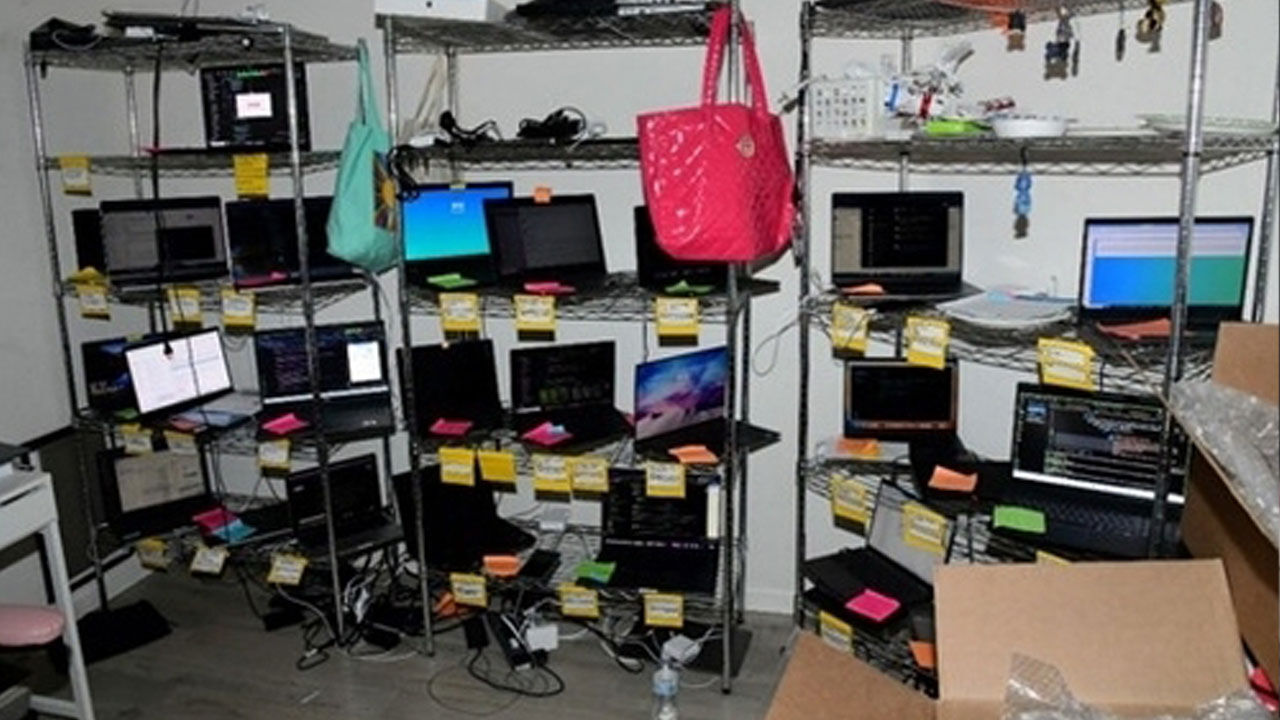
Summary Federal authorities in the United States have dismantled a massive illicit remote-work network where North Korean IT operatives infiltrated dozens of American companies using stolen identities and domestic "laptop farms." In a coordinated statewide operation dubbed 'Operation Lone Star Roundup' led by the FBI and the U.S. Attorney's Office for the Northern District of Texas, law enforcement searched over 40 residential locations and seized 187 devices, including company-issued laptops and KVM switches.
According to investigators, North Korean workers obtained remote tech jobs across roughly 70 U.S. corporations by posing as domestic citizens using fabricated documentation and virtual private networks (VPNs). To bypass physical location checks and enterprise security controls, U.S.-based accomplices hosted so-called "laptop farms" in their private residences. These facilitators received official work laptops shipped by employer firms, installed remote access management software, and routed terminal controls back to North Korean personnel based overseas. The domestic conspirators also received payroll deposits and laundered the proceeds into financial channels directed by the Pyongyang regime.
In a related indictment unsealed by the U.S. Department of Justice, prosecutors charged two U.S. citizens along with a Dandong, China-based coordinator and over a dozen overseas conspirators. Cybersecurity intelligence firms like CrowdStrike track this sophisticated IT operative cluster under the moniker 'Famous Chollima.' U.S. authorities and Treasury estimates highlight that these fraudulent IT operations funnel hundreds of millions of dollars annually—reaching an estimated $800 million in 2024 alone—directly into state-sanctioned programs supporting North Korea's ballistic missile, intelligence, and weapons development.
Sponsored · Ad