Istanbul Paralyzed by Worst Downpour in 41 Years: Deadly Flash Floods Sweep City
Key Points
- Record-shattering rainfall of up to 242 mm triggered lethal flash floods across Istanbul, sweeping away cars and pedestrians and leaving at least two dead.
- The disaster drew widespread attention in South Korea due to striking viral footage of urban destruction and reports from local Korean expats evacuating flooded residential complexes.
- Turkish authorities deployed 8,000 emergency responders, closed schools across multiple provinces, and diverted dozens of international flights as low-lying districts faced waist-deep floodwaters.
Summary Record-breaking torrential rain battered Istanbul, Turkey's largest metropolis, triggering devastating flash floods that swept away vehicles and pedestrians, claimed at least two lives, and prompted widespread emergency closures. According to municipal authorities, rainfall hit up to 242.0 mm in the Beykoz district overnight, with Eyüpsultan and Sarıyer recording 190.5 mm and 187.9 mm respectively—marking the heaviest downpour the city has experienced in 41 years since 1985.
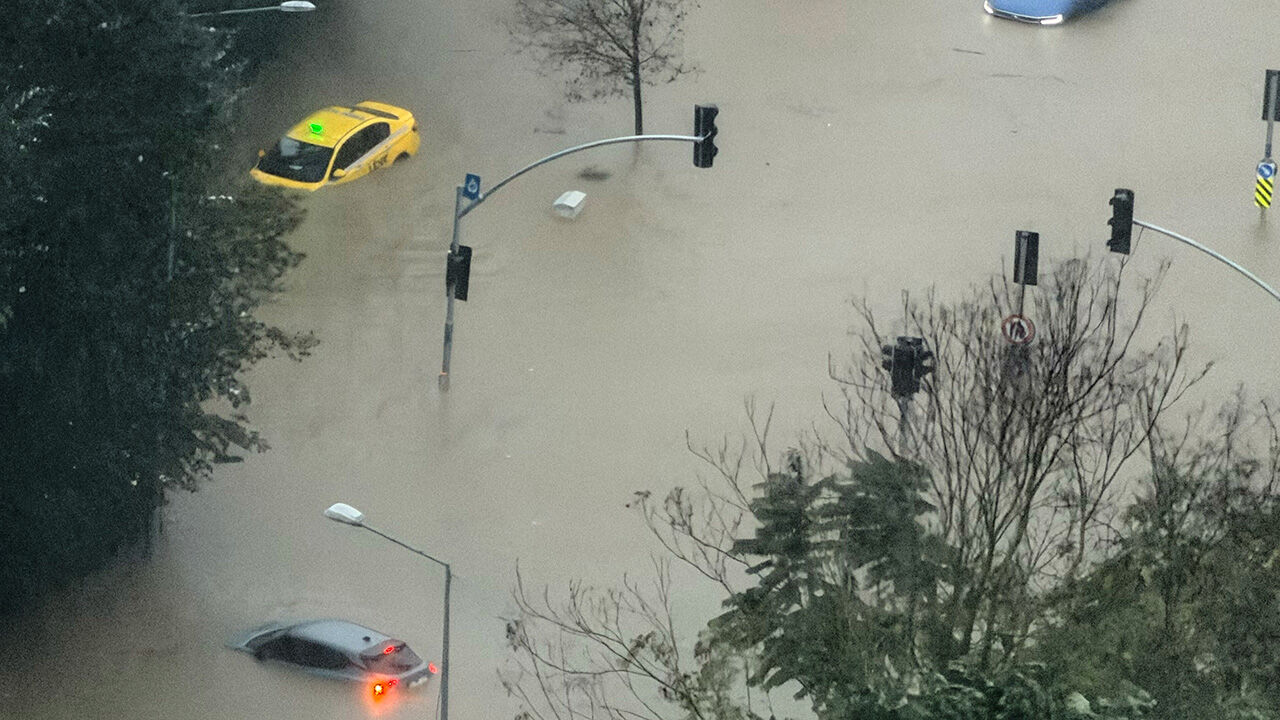
The disaster quickly gained traction across South Korean media and international feeds due to dramatic eyewitness footage shared on social platforms. Viral videos captured muddy torrents rushing down narrow, steep hillside streets, carrying cars and pedestrians helplessly in the current. In low-lying neighborhoods where drainage systems became completely overwhelmed, floodwaters reached above adult waist height, submerging countless vehicles and paralyzing transit across the city. Fatalities were reported under harrowing circumstances: in the Fatih district, a 14-year-old boy stepped into an electrified puddle in a park and was fatally shocked, while in Sarıyer, a 34-year-old man died after slipping on a flooded street and sustaining fatal head injuries against a curb. In the Ayazağa area, rescue teams deployed heavy trucks and minibuses to evacuate approximately 200 overnight shift workers trapped inside an inundated business facility.
The crisis prompted an immediate large-scale emergency response from Turkish authorities. Over 8,000 emergency personnel were mobilized for disaster relief, and all schools across Istanbul and surrounding provinces—including Kocaeli, Sakarya, Yalova, Düzce, and Zonguldak—were ordered closed for the day. Air transit was heavily disrupted, with Turkey’s Ministry of Transport and Infrastructure confirming that 43 flights bound for Istanbul International Airport and three flights destined for Sabiha Gökçen Airport had to be diverted.
The story held particular resonance for Korean audiences as Korean media highlighted accounts from local expatriate communities. In the district of Sarıyer, an area home to a significant Korean expat population, residents rushed to evacuate vehicles after warnings announced that underground apartment parking garages were rapidly taking on water. In Korean news coverage, catastrophic urban flash floods and basement parking inundations evoke immediate, poignant public awareness, recalling similar severe seasonal downpours that modern metropolitan areas face amid changing global weather extremes.
Sponsored · Ad