Spain Appeals FIFA Sanctions to Court of Arbitration for Sport Over Anti-Muslim Fan Chants
Key Points
- The Royal Spanish Football Federation (RFEF) is appealing to the Court of Arbitration for Sport after FIFA rejected its challenge against sanctions for Islamophobic chanting during an Egypt friendly.
- FIFA fined the Spanish federation $20,000 and ordered a partial stadium closure after spectators directed derogatory chants at Egyptian fans during the match in Barcelona.
- The discriminatory chants, which were condemned by Spanish players including devout Muslim star Lamine Yamal, sparked legal debate over how football regulations classify religious slurs.
Summary The Royal Spanish Football Federation (RFEF) is escalating its dispute with global football governing body FIFA to the Court of Arbitration for Sport (CAS), following the dismissal of its appeal against sanctions imposed for Islamophobic chanting during an international friendly match against Egypt. The incident and the federation's legal defense have ignited significant debate surrounding racism, religious discrimination, and regulatory accountability in international football.
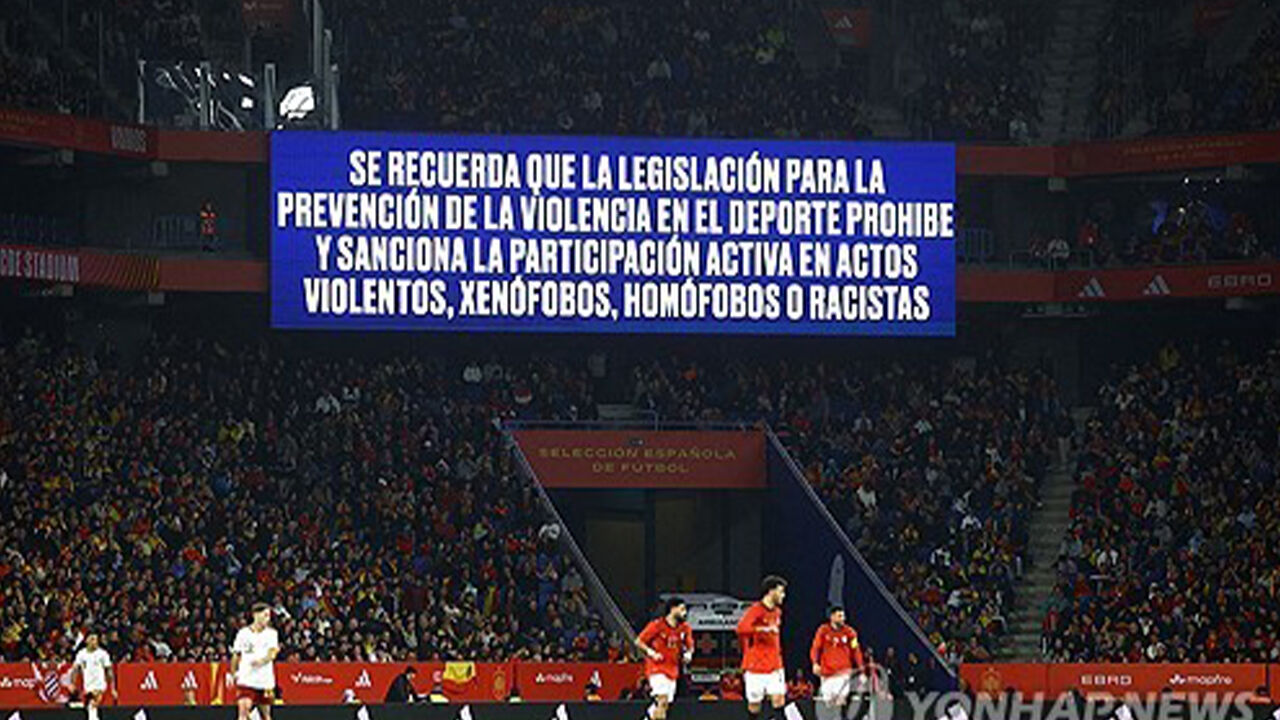
The controversy stems from a friendly encounter held on March 31 at the RCDE Stadium in Barcelona between the national teams of Spain and Egypt. During the first half of the match, sections of the crowd began chanting discriminatory and religiously offensive songs, prominently including the phrase "Anyone who doesn't jump is a Muslim." With Egypt being a nation where Islam is the state religion and the vast majority of citizens are Muslim, the chants were widely viewed as targeted hostility. Although stadium officials flashed warnings across electronic scoreboards urging spectators to cease discriminatory behavior during halftime, the message was met with audible boos from portions of the audience when re-displayed early in the second half.
The behavior drew sharp criticism not only from governing bodies but also from within the Spanish national team itself. Spanish players and federation officials strongly denounced the conduct, with particular attention drawn to star forward Lamine Yamal, the FC Barcelona phenom and devout Muslim whose prominence in Spanish football underscores the sport's multicultural reality. Despite the domestic condemnation, FIFA initiated formal disciplinary proceedings. On August 4—three weeks after Spain celebrated its victory at the 2026 World Cup—FIFA handed down a $20,000 fine and mandated that at least 15 percent of stadium seating be closed for Spain's next friendly match, though allowing closed sections to be reassigned to families, students, and anti-discrimination initiatives upon approval.
In its initial appeal to FIFA, the RFEF mounted a contentious legal argument, asserting that the term "Muslim" is inherently neither insulting nor derogatory. The Spanish federation contended that the spectators' behavior should be evaluated under disciplinary codes governing offensive political, ideological, or religious messages rather than the harsher provisions designated for discrimination and racist abuse. FIFA's Appeal Committee firmly rejected this rationale, upholding the original penalties.
Unwilling to accept the ruling, the RFEF announced it will seek a final verdict from CAS in Lausanne, Switzerland. The federation maintains that its internal security systems proactively detected the infractions, that warnings were promptly broadcast to the crowd, and that authorities received full cooperation in identifying the individuals responsible. As CAS prepares to review the case, the proceedings highlight ongoing tensions in European sports over where governing bodies draw the line between provocative stadium rhetoric and punishable hate speech.
Sponsored · Ad