Iranian Diplomat Quotes Classic Korean Proverb to Warn Seoul Over Naval Redeployment
Key Points
- Iran's Foreign Ministry spokesperson posted an image and message on social media citing the Korean proverb 'If a crow-tit follows a stork, its legs will tear' to warn Seoul against expanding its Cheon
- The post drew widespread attention in Korea for utilizing a native Korean folk idiom and customized political cartoon to deliver a direct diplomatic rebuke to the South Korean government.
- The metaphor contrasts the small 'baepsae' (crow-tit) with the large 'hwangsae' (stork), traditionally warning against exceeding one's capabilities or overextending oneself.
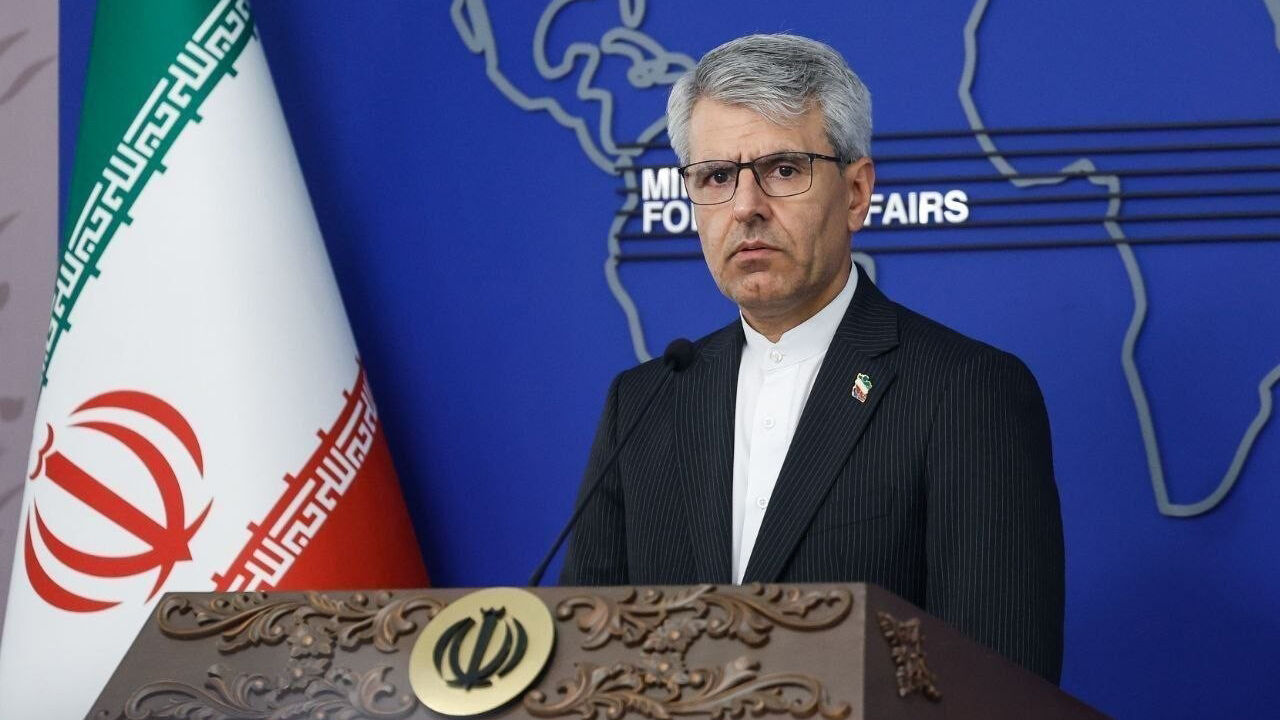
Summary An Iranian official's diplomatic warning made waves in South Korea after he drew directly upon a well-known Korean proverb to deliver a sharp political critique. Esmaeil Baghaei, spokesperson for Iran's Foreign Ministry, posted an illustration and commentary to his X (formerly Twitter) account citing the ancient idiom: "뱁새가 황새를 따라가면 가랑이가 찢어진다" (If a crow-tit tries to follow a stork, its crotch will tear).
The visual accompanying the post explicitly translated the metaphor into current geopolitics: a tiny crow-tit (baepsae) sits perched upon a rock, gazing up at a falling stork whose wings bear the pattern of the American Stars and Stripes. Directly across on an opposing cliff stands the Iranian flag, overlooking naval warships and oil tankers navigating waters clearly intended to evoke the strategic Strait of Hormuz. In both Korean and English text, Baghaei cited the proverb's Korean origin to caution Seoul against expanding military involvement alongside the United States.
In Korean culture, the 'baepsae' (crow-tit or vinous-throated parrotbill) is a tiny, short-legged bird, while the 'hwangsae' (oriental stork) is large with long, sweeping legs. The proverb serves as a classic cautionary tale warning people not to overextend themselves or mimic those vastly larger and more capable, lest they ruin themselves trying to keep up. While the proverb famously gained modern global pop-culture fame through BTS's hit anthem "Baepsae" (Silver Spoon)—where it was repurposed as a critique of generational hierarchy and socioeconomic inequality—its usage here by a foreign diplomat weaponizes traditional Korean linguistic heritage in high-stakes international diplomacy.
The diplomatic friction centers on the South Korean government's move to broaden the operational area of its Cheonghae Naval Unit. Stationed in the Gulf of Aden near Somalia, the anti-piracy unit is slated to expand its patrol zone closer to the Strait of Hormuz near southern Oman, alongside dispatching maritime patrol aircraft, explosive ordnance disposal (EOD) teams, and unmanned minesweepers. While South Korea cited a threefold increase in regional piracy and stated its mission strictly adheres to non-involvement in war to protect citizens and shipping, Tehran condemned the redeployment as complicity in American aggression, warning that no pretext like freedom of navigation would shield Seoul from the diplomatic and legal fallout.
Sponsored · Ad