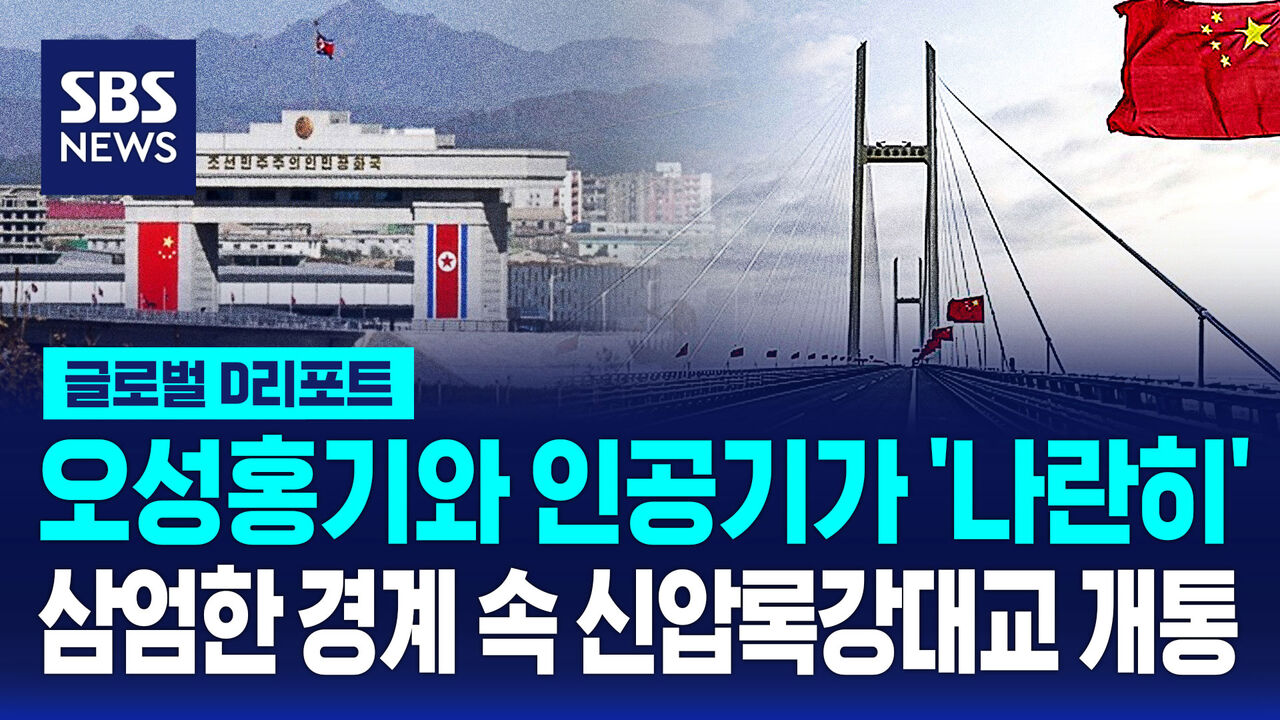
New Yalu River Bridge Officially Opens Under Heavy Guard, Cementing China-North Korea Economic Ties
Key Points
- The New Yalu River Bridge, connecting Dandong, China and Sinuiju, North Korea, has officially opened to traffic under heavy security after standing unfinished on the North Korean side since 2014.
- The opening marks a major expansion in logistics between Pyongyang and Beijing, raising concerns that closer economic cooperation could soften international sanctions.
- Strengthened economic and transport backing from China and Russia may reinforce North Korea's recent stance defining inter-Korean relations as two separate, hostile states.
Summary Connecting the northeastern Chinese border city of Dandong in Liaoning Province to Sinuiju in North Korea, the New Yalu River Bridge has officially opened under heavy security. The monumental infrastructure project—a modern four-lane cable-stayed bridge stretching 3,026 meters—was completed by China back in 2014 at an estimated cost of 440 billion South Korean won (approx. $330 million USD). However, its operation had remained stalled for years because connecting roads and customs inspection infrastructure on the North Korean side were never finished.
At the opening ceremony, trucks adorned with the Chinese national flag and North Korea's flag crossed the bridge while honking their horns as officials from both sides waved. Chinese Premier Li Qiang delivered a congratulatory video address, highlighting that the bridge's opening will significantly boost economic and trade cooperation as well as facilitate personnel exchanges between Beijing and Pyongyang. Coupled with North Korea's existing Tumen River road bridge connecting Rason to Khasan in Russia, this new artery further solidifies Pyongyang's direct logistical links to its traditional allies.
The event carries major geopolitical and economic weight across Northeast Asia. While strict UN Security Council sanctions still prohibit key North Korean exports—such as coal, seafood, and textiles—and ban overseas North Korean labor, experts point out that the bridge will dramatically simplify the movement of everyday livelihood goods and informal cross-border trade. Analysts in Seoul caution that this could dilute international sanctions over time. Furthermore, as Pyongyang deepens its economic reliance on Beijing and Moscow, it may further consolidate its hardline stance toward South Korea and entrench its recent policy declaring the two Koreas as 'two separate, hostile states.'
Sponsored · Ad