NASA's 1.5-Ton Swift Space Telescope Set for Atmospheric Re-Entry: Zero Risk to Korea
Key Points
- NASA's retired 1.5-ton Swift space observatory is making an uncontrolled re-entry into Earth's atmosphere today after roughly 22 years of service.
- South Korea's aerospace agency confirmed that the Korean Peninsula is completely safe from debris due to the satellite's low orbital inclination.
- A prior rescue mission by a private space startup failed, leaving durable tungsten fragments expected to splash down in oceans across equatorial latitudes.
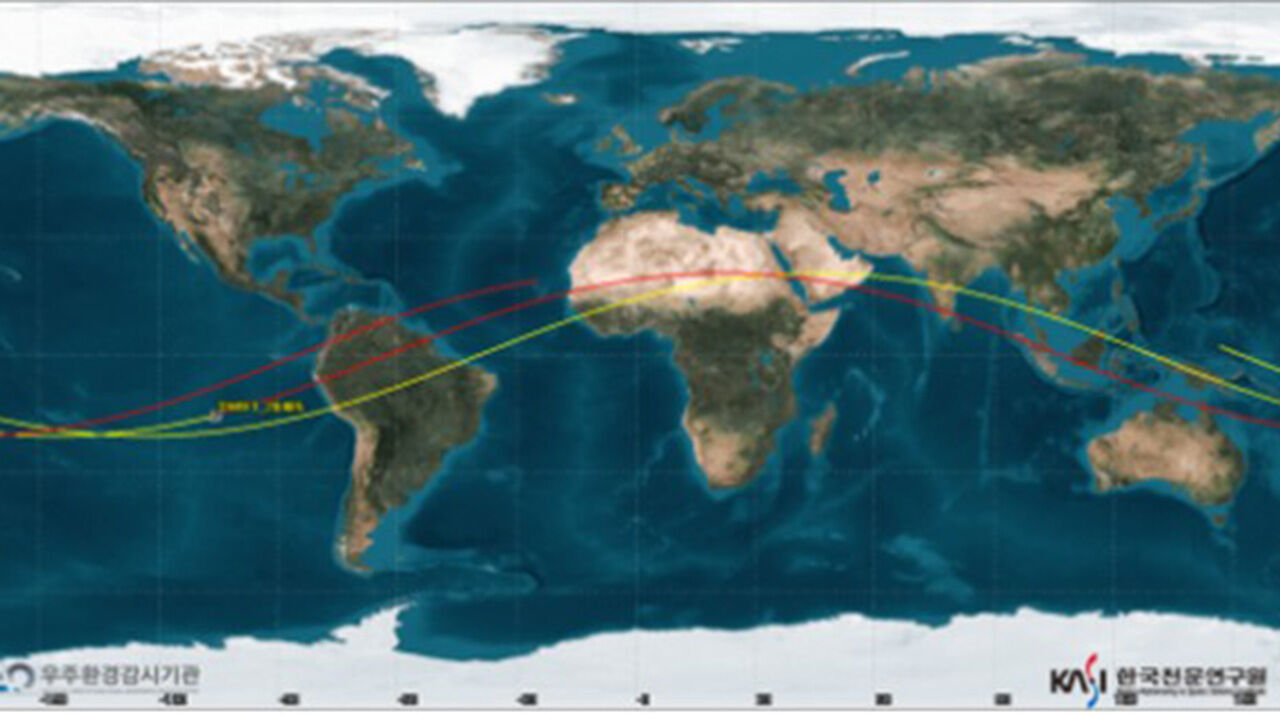
Summary South Korea's newly established Korea AeroSpace Administration (KASA) and the Korea Astronomy and Space Science Institute (KASI) announced that NASA's retired Neil Gehrels Swift Observatory is scheduled to re-enter Earth's atmosphere today, with zero risk of debris falling on the Korean Peninsula.
Swift is a 1.5-ton space telescope launched in 2004 dedicated to monitoring gamma-ray bursts across deep space. Having faithfully operated for roughly 22 years, its mission officially ceased on October 20. Following retirement, the satellite slipped into an uncontrolled descent, orbiting at an altitude of approximately 199 to 205 kilometers. South Korean space authorities projected the re-entry around 8:46 PM local time (with a two-hour margin of error), largely aligning with forecasts from the U.S. Combined Space Operations Center and the European Space Agency.
Due to the observatory's orbital inclination of 20.5 degrees, its flight path remains strictly confined between 20.5 degrees south and 20.5 degrees north latitude. Because the Korean Peninsula sits well north of 33 degrees north latitude, it lies completely outside the satellite's potential impact zone. While the majority of the satellite's body will incinerate during atmospheric re-entry, resilient components made of tungsten are anticipated to survive the intense heat and crash into the ocean. The potential ground track spans vast regions across Africa, Australia, India, Southeast Asia, and Central and South America.
Earlier this year, NASA attempted an ambitious rescue operation by contracting private startup Katalyst Space Technologies to launch a specialized spacecraft named "Link" to boost Swift into a higher orbit. However, Link lost control during the operation, leaving Swift on its inevitable downward spiral. South Korean authorities noted that because this is an uncontrolled re-entry of a sizable satellite, KASA and KASI will continue tracking and monitoring the descent until final atmospheric burnout is confirmed.
Sponsored · Ad