Are They Really 'Pro'? Taxpayers Fund 64% of Budgets for South Korea's Civic Football Clubs
Key Points
- An investigation revealed that 14 municipal and provincial K League clubs took in 140.1 billion KRW in public subsidies last year, accounting for 64% of their total income.
- Excluding three established clubs, civic teams depend on government handouts for over 73% of their budgets while suffering from wage delays, embezzlement, and threats of dissolution.
- The K League's heavy reliance on public subsidies contrasts sharply with major foreign football leagues and South Korea's domestic baseball league, which have prioritized financial self-sufficiency.
Summary A comprehensive investigation into South Korea's professional football ecosystem has revealed alarming financial vulnerabilities, highlighting that the majority of K League clubs exist merely in name as 'professional' outfits while relying overwhelmingly on taxpayer funds.
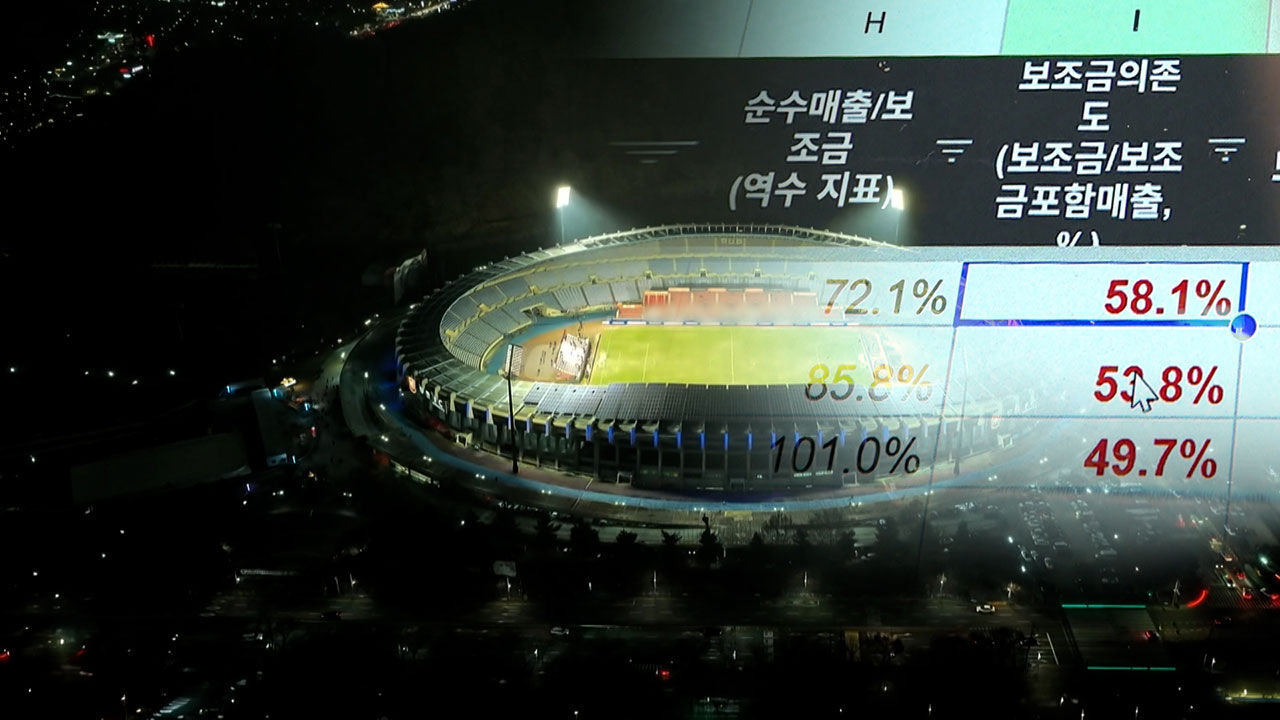
According to an exhaustive financial analysis conducted by SBS, 17 of the 29 clubs across K League 1 and K League 2 are 'citizen clubs' (si-do-min gudan)—teams created, owned, and financed by local municipal and provincial governments rather than private corporate conglomerates. Examining financial disclosures from 14 established citizen clubs (excluding three newly joined teams), the report found that local government subsidies totaled 140.1 billion KRW (approximately $105 million USD) last year. Shockingly, these subsidies constituted 64% of the clubs' overall operating revenue.
When excluding Gangwon FC, Daegu FC, and Incheon United—the only three citizen clubs structured as joint-stock corporations with established business models where self-generated earnings exceeded public funding—the situation becomes even more dire. For the remaining 11 citizen clubs, dependence on government subsidies soared to an average of 73.4%. In fact, the combined self-generated revenues of all 11 clubs fell short of the total revenue generated by Gangwon, Daegu, and Incheon combined.
Despite receiving billions of won in public subsidies, several clubs remain on the brink of collapse. Paju faced a severe wage arrears crisis in its very first year after turning professional, while Gimhae struggled through its debut campaign with only two victories, prompting the city's mayor to openly question whether the club should be disbanded due to a lack of public benefit and financial sustainability. In Gimpo, where an accounting officer was arrested over an alleged 8 billion KRW embezzlement scandal, the club has barely remained solvent by tapping into supplementary municipal budgets.
This precarious reality starkly contrasts with top overseas football leagues, where clubs thrive on broadcast rights, corporate sponsorships, matchday ticket sales, and merchandise. It also stands in sharp contrast to South Korea's professional baseball league (KBO), which systematically reduced parent company financial aid from 41% in 2018 to 25% last year to foster self-sufficiency. As public debate intensifies in the wake of recent structural concerns surrounding Korean football, critics are questioning whether taxpayers should continue bankrolling unsustainable sports franchises without rigorous accountability.
Sponsored · Ad