'Protect Her Body': The Tragic 1991 Standoff and South Korea's Enduring Pro-Democracy Memory
Key Points
- SBS's historical documentary show *Kkokkomu* revisited the 1991 death of university student Kim Gwi-jeong during a violently suppressed pro-democracy protest.
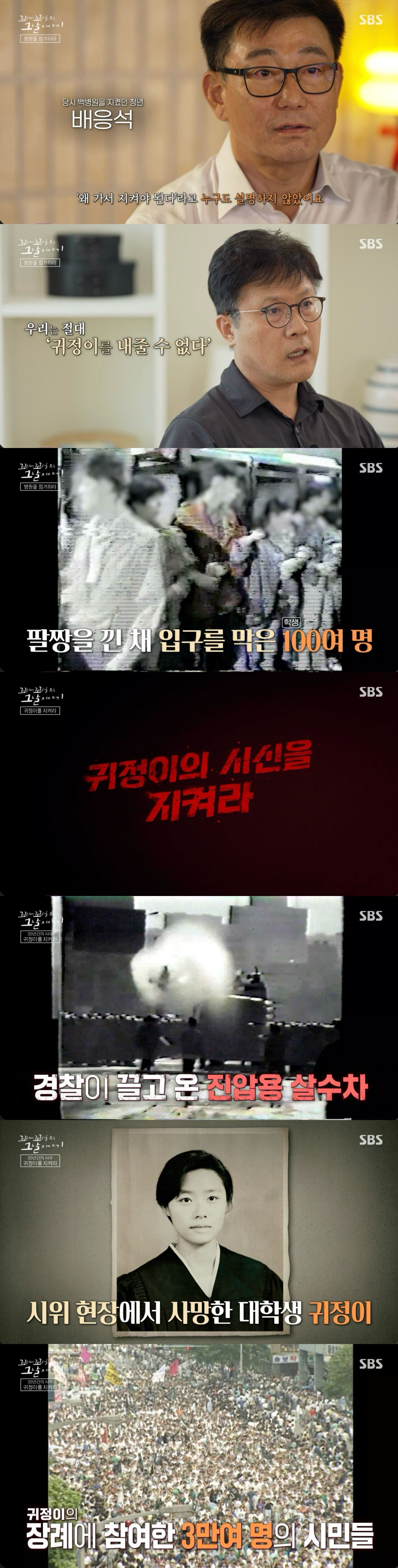
- The episode trended as viewers reflected on the harrowing standoff where hundreds of students formed a human shield at a hospital mortuary to prevent police from seizing her remains.
- South Korea's modern democracy was forged through such sacrifices in the late 1980s and early 1990s, where student activists faced tear gas, plainclothes units, and state cover-ups.
Summary SBS's popular investigative storytelling program *Story of the Day When the Tail Bites the Tail* (popularly known as *Kkokkomu*) brought renewed national attention to one of the most heartbreaking chapters in South Korea's modern democratization movement: the 1991 death of student activist Kim Gwi-jeong and the desperate battle waged by her peers to safeguard her body.
In May 1991, Kim Gwi-jeong, a 26-year-old French literature student at Sungkyunkwan University, died during a pro-democracy rally after police brutally suppressed demonstrators using tear gas, handheld tear gas grenades (known colloquially as *sagwatan* or apple bombs), and plainclothes snatch units called the *Baekgoldan* (White Bone Squad). State authorities immediately moved to classify her death as a simple accidental asphyxiation from a stampede, attempting to seize her body from Seoul's Myeongdong Paik Hospital for a hasty autopsy just five hours after her death. Having recently witnessed other incidents where police allegedly seized deceased protesters to conceal evidence, hundreds of university students formed a human scrum around the hospital mortuary, vowing with their bare bodies to defend Kim's remains from roughly 1,500 riot police equipped with water cannons and tear gas.
The broadcast highlighted the poignant backstory of Kim, who worked factory jobs by day and restaurant shifts by night to afford tuition before joining the student democracy movement. Although an official state autopsy later concluded her direct cause of death was compression asphyxiation, an independent fact-finding committee formed by fellow students and alumni gathered photographic evidence and eyewitness testimonies proving police trapped fleeing demonstrators in alleys. Decades later, her fellow classmates—who still visit her gravesite annually and carry the profound emotional weight of that fateful May—recalled the funeral where 30,000 mourners marched, ultimately securing state acknowledgment under the civilian government four years later that Kim died due to excessive force by riot police.
Sponsored · Ad