Google Picks Blue Origin's New Glenn Rocket to Launch Space AI Satellites in 2029
Key Points
- Blue Origin's New Glenn rocket was selected to launch multiple computing satellites for Google's space AI experiment, Project Suncatcher, targeting Q1 2029.
- The project aims to ease the burden on Earth's power grids and cooling systems by running Google's custom TPU AI chips on continuous solar power in orbit.
- The announcement follows recent propulsion setbacks, including a May New Glenn ground test explosion and a November 15 ULA Vulcan crash that both involved Blue Origin's BE-4 engine.
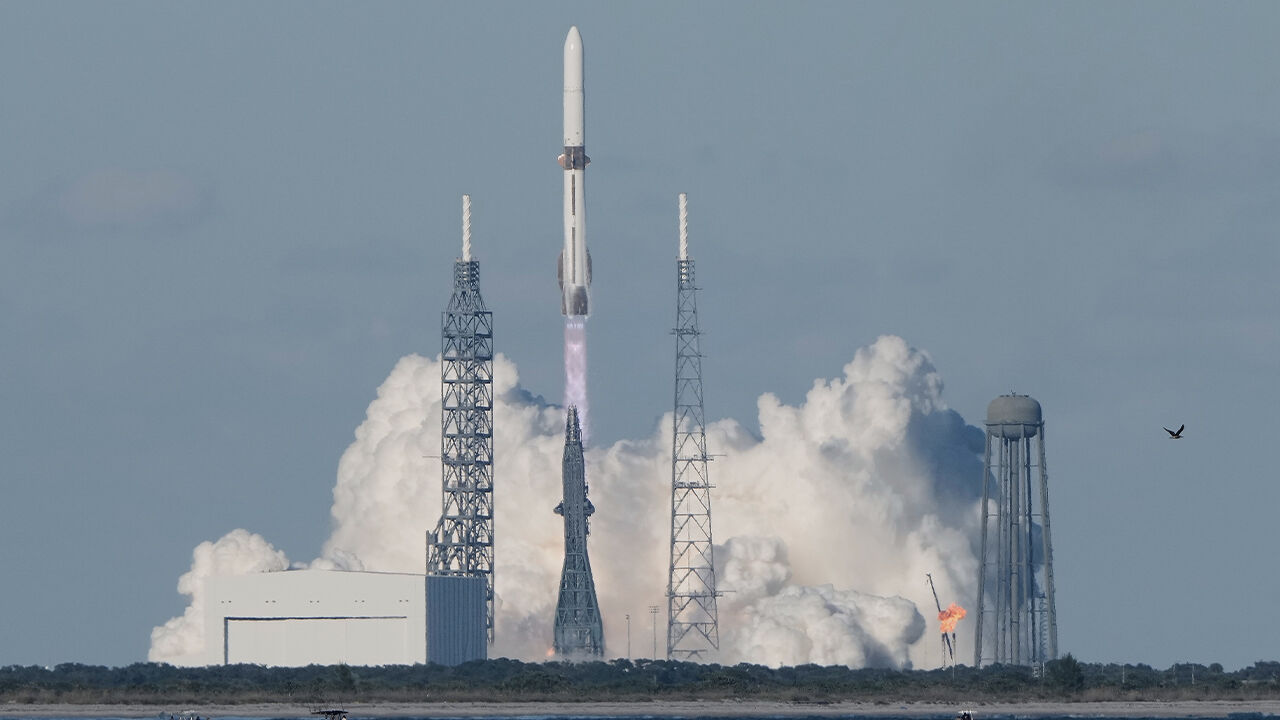
Summary Blue Origin, the aerospace company founded by Amazon's Jeff Bezos, announced on November 19 (local time) that its heavy-lift New Glenn rocket has been selected to launch satellites for Google's space-based artificial intelligence experiment, "Project Suncatcher." The launch is targeted for the first quarter of 2029 and will carry multiple Google computing satellites, marking Google's first dedicated heavy-lift rocket launch for the initiative.
Project Suncatcher aims to move energy-intensive AI computing off Earth and into orbit. By harnessing uninterrupted solar power in space, Google hopes to ease the growing strain that AI data centers place on terrestrial power grids, land availability, and cooling infrastructure. As AI adoption accelerates and computing demand surges, competitors such as Elon Musk's SpaceX and the startup Starcloud are also exploring the feasibility of orbital data centers.
Each satellite in the mission will be equipped with Google's custom-designed AI chips, known as Tensor Processing Units (TPUs), delivering computing power roughly equivalent to a single server rack in a ground-based data center. The satellites will test whether continuous orbital solar energy can reliably power heavy AI workloads. Last month, Google partnered with Earth-observation company Planet Labs to launch a Project Suncatcher prototype satellite aboard a SpaceX rocket, confirming that it operated normally. Through these trials, engineers are evaluating whether the chips can withstand launch shock, radiation—which can damage electronics and corrupt data—and extreme temperatures, as well as how effectively heat can be dissipated in a vacuum using pipes and panels rather than conventional ground cooling systems.
Despite the milestone, experts caution that commercializing space-based data centers remains years away due to high launch costs, complex engineering hurdles, and limited satellite manufacturing capacity. The selection of New Glenn also comes amid recent setbacks for Blue Origin's propulsion technology: in May, a New Glenn rocket exploded during a ground test, damaging its launchpad, and on November 15, a United Launch Alliance (ULA) Vulcan rocket crashed just 10 minutes after liftoff, resulting in the loss of 40 Amazon satellites. Both New Glenn and Vulcan rely on Blue Origin's BE-4 as their primary first-stage engine.
Sponsored · Ad