Magnitude 7.7 Earthquake Strikes Panama: Capital Evacuates, Flights Grounded, and Tsunami Alerts Issued
Key Points
- A shallow magnitude 7.7 earthquake struck near Pitaloza Arriba in southwestern Panama, triggering aftershocks up to magnitude 6.4 and shaking buildings as far as Colombia.
- The major international disaster drew immediate coverage in Korea due to widespread tsunami warnings across Latin America and safety checks on critical transit and the Panama Canal.
- Situated along the seismically active Pacific Ring of Fire, Panama suspended school classes, closed international airports, and halted subways while confirming the vital canal remained operational.
Summary A powerful magnitude 7.7 earthquake struck southwestern Panama on October 9 at around 12:56 PM local time, triggering immediate mass evacuations across major metropolitan centers and prompting widespread tsunami warnings along the Pacific coastline of Latin America. According to the United States Geological Survey (USGS), the epicenter was recorded approximately 14 kilometers southwest of the remote village of Pitaloza Arriba, situated near the southernmost tip of Panama, with an estimated focal depth of 10 kilometers.
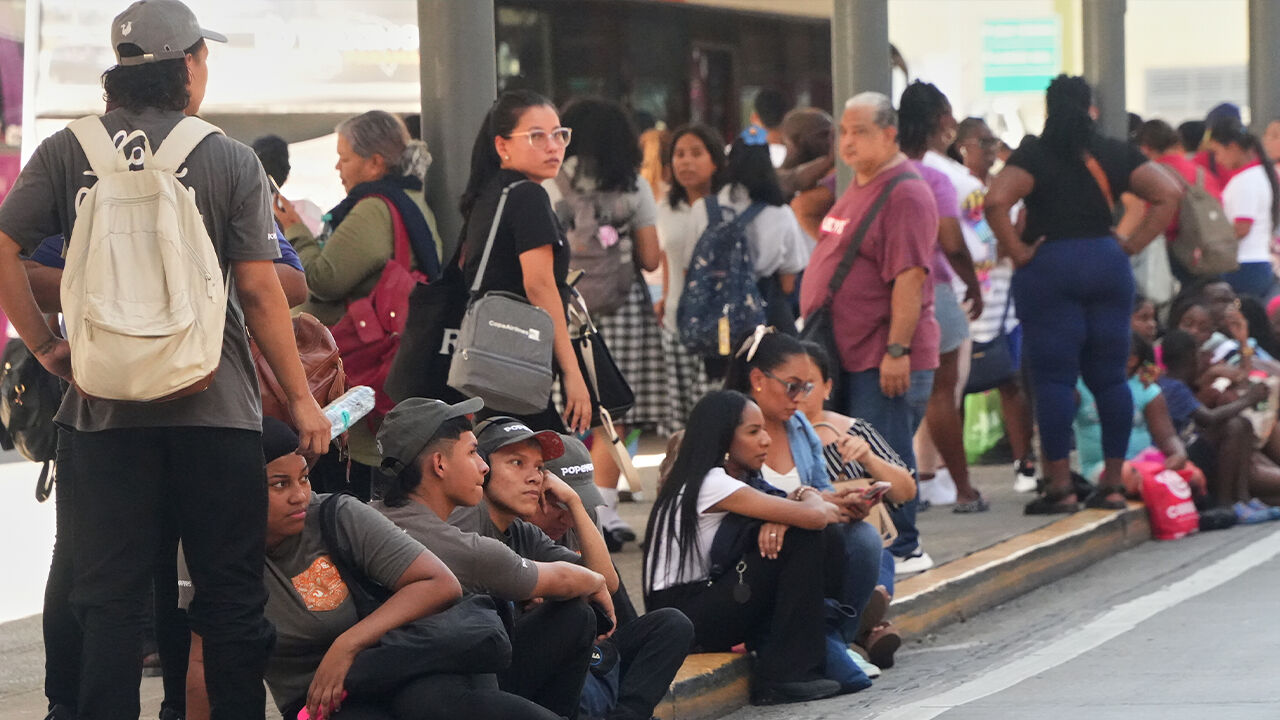
While the USGS initially assessed the tremor at magnitude 8.0 before briefly adjusting it to 7.6 and settling on 7.7, the Geosciences Institute at the University of Panama recorded the event at a magnitude of 7.2. Despite the conflicting initial readings, the sheer force of the shallow seismic rupture was felt across hundreds of kilometers, shaking high-rise towers in Panama City—some 200 kilometers away from the epicenter—and sending shockwaves as far as neighboring Colombia. In Panama City, terrified office workers and shoppers poured out of swaying skyscrapers and shopping malls into the streets as emergency alarms echoed throughout the capital.
In the crucial hours following the main event, the regional geological instability intensified. Local newspaper La Prensa reported that approximately 30 aftershocks were logged within just one hour of the initial quake, including a severe magnitude 6.4 tremor. The USGS independently confirmed subsequent aftershocks reaching magnitudes of 5.8 and 5.6. The heightened seismic activity prompted the USGS to issue tsunami hazard alerts spanning three hours for coastal zones across Panama, Colombia, Costa Rica, Ecuador, Peru, Nicaragua, Guatemala, El Salvador, and Mexico.
Government agencies moved quickly to minimize public risk and inspect critical national infrastructure. Panama’s Ministry of Education suspended all afternoon classes nationwide. Civil aviation authorities temporarily shut down Tocumen International Airport to evaluate runway and terminal integrity, while urban transit operators halted services on Metro Lines 1 and 2. Crucially for global supply chains, authorities confirmed that the Panama Canal—one of the world's most critical maritime shipping chokepoints—suffered no catastrophic disruptions and continued standard operations.
On the ground, national defense and civil protection authorities reported that the heaviest structural impacts were concentrated in the central provinces of Veraguas, Herrera, and Los Santos. Notable historic landmarks and civic facilities suffered direct hits, including the Santiago Apostol Cathedral and local municipal government buildings in Veraguas, which sustained visible structural damage. In addition, extensive power outages disrupted electricity grids across six different provinces. While Panama City’s dense skyline avoided immediate reports of structural collapse or casualties, the National Civil Protection System (SINAPROC) launched comprehensive field damage assessments across rural areas near the epicenter. As an active territory on the Pacific Ring of Fire—a seismic zone known locally as 'the ring of fire' (환태평양 조산대)—Panama remains on elevated alert for further structural hazards and geological instability.
Sponsored · Ad