Devastating Flash Floods Strike Nepal Again as Landslides Tear Through Villages and Infrastructure
Key Points
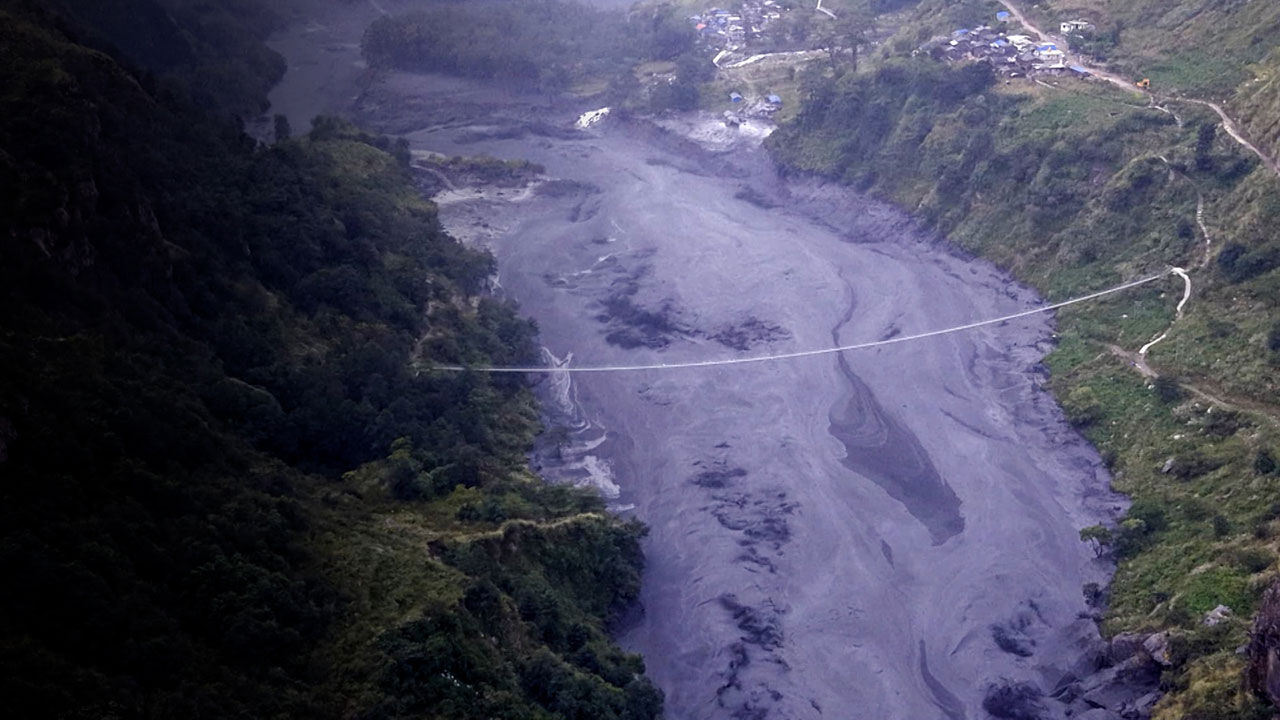
- A sudden landslide and glacial flood tore along the Budhi Gandaki River in Nepal's Gorkha district, demolishing dozens of homes, bridges, and hydroelectric facilities.
- The event resonates deeply in South Korea, where nine Korean infrastructure engineers remain missing from a strikingly similar disaster in late August.
- Authorities suspect melting glaciers caused an alpine natural dam to burst, sweeping dark mud and torrents downstream and prompting urgent military rescue operations.
Summary A massive flash flood and landslide swept through western Nepal's Gorkha district along the Budhi Gandaki River in the early morning hours, obliterating dozens of residences, tearing down at least three bridges, and wrecking essential hydroelectric facilities. Fast-moving currents carrying heavy sediment and debris swept away green-roofed village buildings in mere seconds, leaving more than ten people missing while Nepalese military personnel deployed helicopters and ground forces to rescue 49 stranded villagers.
The disaster has sent ripples across South Korea due to painful recent history in the region. Nepalese authorities suspect the catastrophe was triggered when an alpine natural dam—formed by melting glacial waters—collapsed under the strain of landslides, unleashing a devastating wall of mud and water downstream. The tragedy closely mirrors a colossal deluge that occurred on August 26 along the Trishuli River basin, which claimed over 1,400 lives and left more than 6,600 missing across Nepal and Tibet's Gyirong County.
For South Korean viewers, this recurring natural disaster carries an intensely personal and tragic resonance. Nine South Korean overseas construction workers—six from Doosan Enerbility and three from Korea South-East Power (KOEN)—went missing during the August hydroelectric project disaster and remain unaccounted for. In South Korea, news of repeated glacial dam failures in Nepal garners immediate public attention and heartfelt concern, highlighting both the acute dangers faced by overseas infrastructure engineers and the escalating vulnerability of high-altitude Himalayan communities to climate-driven environmental disasters.
Sponsored · Ad