Pentagon Skips Formal Press Release Following U.S.-South Korea Defense Ministerial Talks
Key Points
- The U.S. Department of Defense did not issue an official readout after defense ministerial talks between Pete Hegseth and South Korea's Kang Shin-chul, stating there was nothing to release despite iss
- The omission has drawn close scrutiny in South Korea as the traditional autumn Security Consultative Meeting (SCM) has been pushed to early next year.
- The delay and communications gap highlight sensitive ongoing coordination between Seoul and Washington over key alliance issues, including the transfer of wartime operational control.
Summary The Pentagon did not release an official readout or statement following bilateral talks between U.S. Defense Secretary Pete Hegseth and South Korean Defense Minister Kang Shin-chul at the ASEAN Defense Ministers' Meeting-Plus (ADMM-Plus), stating simply that there was "nothing to distribute."
The lack of a formal statement from the U.S. side has drawn significant attention in South Korea, as defense ministerial talks typically conclude with synchronized press releases from both nations. While South Korea's Ministry of National Defense issued a statement announcing plans for a bilateral meeting in Washington, D.C., this coming December followed by the formal Security Consultative Meeting (SCM) early next year, the U.S. Department of Defense issued official readouts for Secretary Hegseth’s meetings with counterparts from several other regional partners—including Japan, Australia, India, the Philippines, and Singapore.
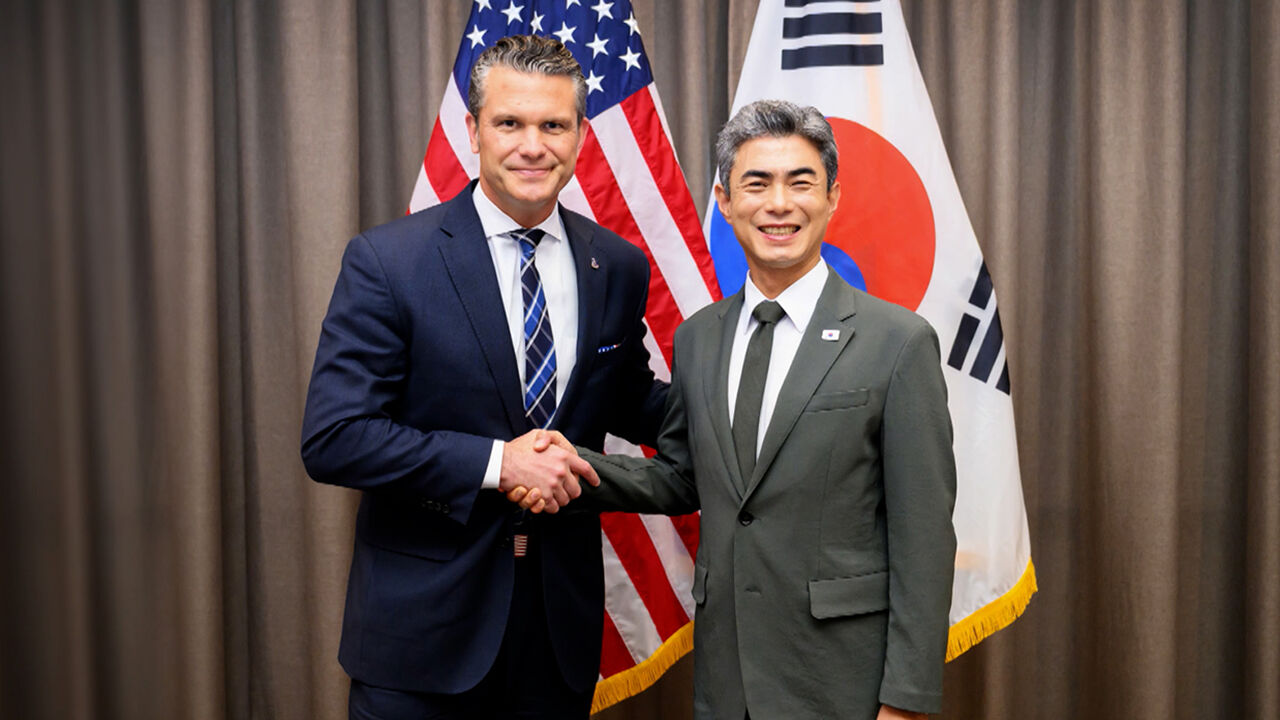
Instead of an official press release, Secretary Hegseth shared a photo of his meeting with Minister Kang on X (formerly Twitter). In his post, Hegseth emphasized that the U.S.–ROK alliance is rooted in peace through strength, ready forces, decisive capabilities, and combined combat readiness to deter provocation, adding that the United States stands with allies committed to their own defense.
In South Korea, bilateral defense diplomacy and the timing of the annual SCM carry immense strategic and political weight. The SCM traditionally convenes between late October and early November and serves as the premier venue for addressing alliance priorities, notably the ongoing transition of wartime operational control (OPCON) to South Korea. With the annual summit postponed to early next year, diplomatic observers and the Korean public are closely watching how both allies navigate and coordinate their shared security posture and strategic timeline.
Sponsored · Ad