US Army Report Reveals Unaddressed Altimeter Flaws Prior to Fatal D.C. Air Collision
Key Points
- A disclosed US Army report revealed officials knew older Black Hawk helicopters had prone-to-error altimeters before a mid-air collision near Washington, D.C., that killed 67 people in January 2025.
- The investigation found the helicopter's instrument showed 200 feet when its true altitude was 278 feet, and operating manuals will not fully reflect the known issue until 2027.
- Compounding systemic issues included insufficient risk management, inadequate training for crowded airspace, and night-vision limitations in urban lighting.
Summary An internal US Army investigation has revealed that military officials were aware of potential altimeter inaccuracies in older Black Hawk helicopters prior to a devastating mid-air collision near Washington, D.C., that claimed 67 lives, but failed to rectify the defect or properly warn flight crews.
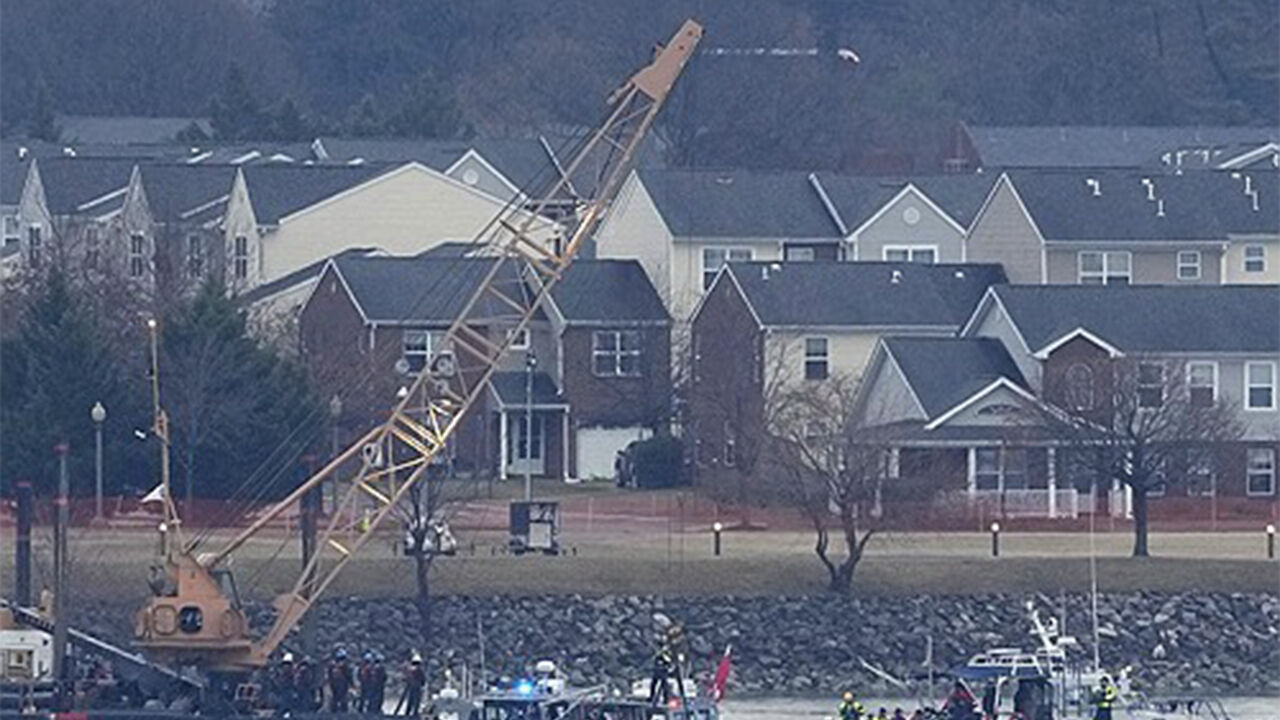
According to findings obtained by The Washington Post and widely covered by Korean media, the crash occurred on January 29, 2025, near Ronald Reagan Washington National Airport when an American Airlines passenger jet collided in mid-air with a US Army UH-60 Black Hawk helicopter over the Potomac River, killing everyone aboard both aircraft. While the National Transportation Safety Board (NTSB) initially cited Federal Aviation Administration (FAA) route design as a primary factor, the Army's newly disclosed report highlights compounding systemic and mechanical failures within the military branch itself.
The report details that barometric altimeters installed in older Black Hawk models permitted measurement discrepancies of up to 140 feet (approximately 43 meters) while still technically meeting military flight standards. At the time of the crash, the helicopter's cockpit instrument displayed an altitude of 200 feet, whereas the aircraft was actually flying at roughly 278 feet over the river. Additionally, auxiliary fuel tanks mounted on the helicopter were found to distort altimeter readings.
Beyond mechanical issues, the report uncovered notable gaps in risk management and operational readiness. Army leadership had not systematically cataloged near-miss incidents over preceding years, nor had it provided adequate training regarding the congested airspace around the nation's capital. Furthermore, investigators noted that the helicopter crew's use of night-vision goggles likely hindered their ability to distinguish the approaching airliner amidst urban background lighting, with indications that the crew may have been monitoring an entirely different aircraft. Although the Army notified forces of potential altimeter errors post-incident, formal revisions to flight operating manuals are not scheduled to take effect until 2027, and the report included no disciplinary measures against military leadership.
Sponsored · Ad