South Korea Rests Aces Shin Yu-bin and Lim Jong-hoon, Fielding Rising Stars for Asian Table Tennis Championships
Key Points
- South Korea has announced its roster for the 29th Asian Table Tennis Championships in Tashkent, resting established stars like Shin Yu-bin, Lim Jong-hoon, and Jang Woo-jin due to fatigue from recent i
- The squad will instead feature backup and alternate trial qualifiers, giving rising players a prime platform to compete internationally and secure quota spots for next year's World Championships.
- Reflecting South Korea's strict meritocratic sports system, quota spots won in Tashkent will belong to the nation rather than individual players, with domestic trials planned to decide final world cha
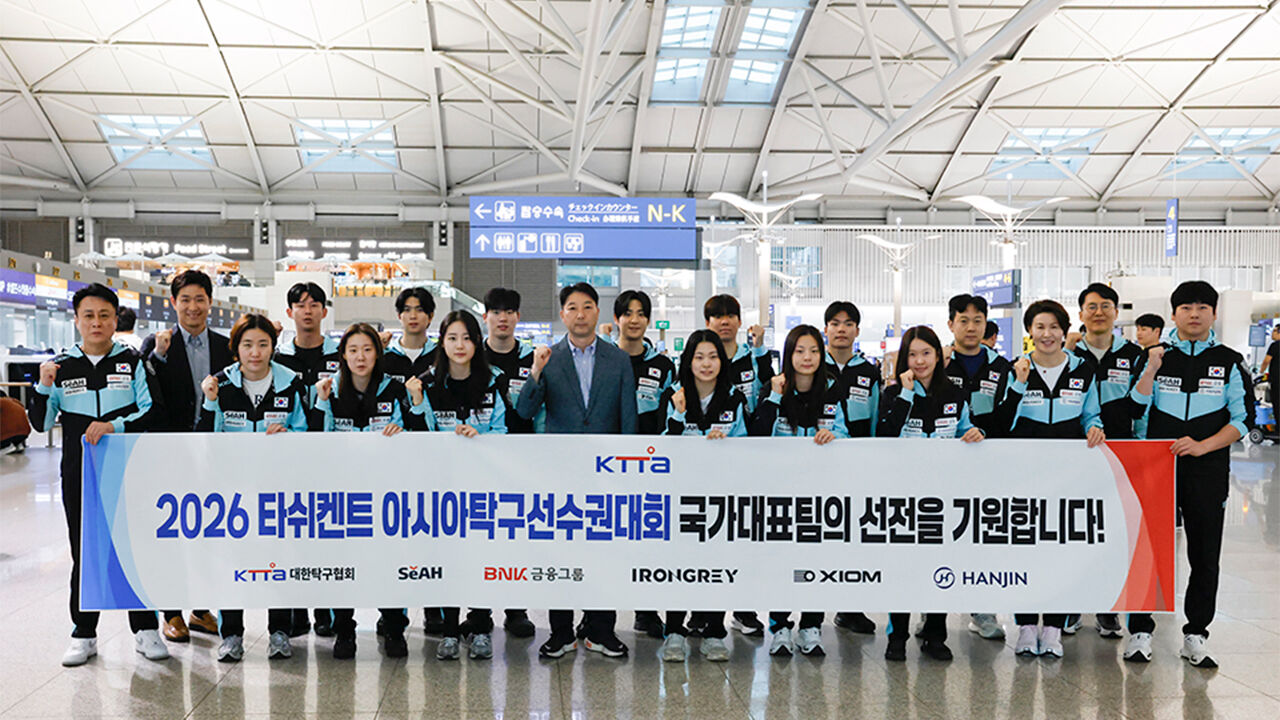
Summary South Korea's national table tennis squad is taking an unorthodox, high-stakes gamble as it heads into the 29th Asian Table Tennis Championships in Tashkent, Uzbekistan. Rather than deploying its marquee roster, the team is entering the continental tournament with what is effectively a 'second-string' (2-gun) squad. Household names and Olympic-level stars such as Shin Yu-bin, Lim Jong-hoon, and Jang Woo-jin have all been excluded from the official roster. The decision comes after a grueling competitive calendar that included the Asian Games, World Table Tennis (WTT) Champions, and the China Smash, leaving top players severely fatigued and in need of restorative rest.
In their place, the Korea Table Tennis Association (KTTA) has called up next-in-line contenders and athletes who earned selection marks during the national trials held earlier in May. Leading the men's contingent are Park Gyu-hyeon, Lim Yu-no, Kim Min-hyeok, Kang Dong-soo, and Park Gang-hyeon. The women's side features Lee Eun-hye, Park Ga-hyeon, Lee Da-eun, Lee Si-on, and Yoo Si-woo. Head coach Choi Young-il oversees the delegation, supported by women's coach Seok Eun-mi and men's coach Yoon Jae-young. For these emerging players, donning the revered 'Taegeuk mark' (the national flag insignia) represents a career-defining opportunity to showcase their potential on a premier international stage.
Beyond continental pride, the championship carries major stakes: individual event finishes will earn qualification quota slots for next year's World Table Tennis Championships. However, in a move reflective of Korea's intensely merit-based sporting governance, qualifying slots do not automatically belong to the athletes who win them. Instead, quotas belong to the nation, and the KTTA plans to hold separate domestic trials to allocate those spots. The federation emphasizes that this policy avoids over-reliance on world ranking points, ensuring that only athletes at their peak competitive condition represent the country.
The upcoming matches will test the depth of South Korea's table tennis pipeline across singles, doubles, and mixed doubles events played under a best-of-five format. Following historic accomplishments in recent years—including Lim Jong-hoon and An Jae-hyun’s historic men's doubles gold in 2024, the first in 32 years—the pressure is on this fresh cohort to prove that Korean table tennis has real championship depth beyond its celebrated front-line superstars.
Sponsored · Ad