New Yalu River Bridge Opens After 12 Years, Signaling Closer Ties Between China and North Korea
Key Points
- The 3,026-meter New Yalu River Bridge connecting Dandong, China, and Sinuiju, North Korea, officially opened 12 years after its 2014 completion.
- The long-delayed opening highlights rapidly warming diplomatic and trade ties between Beijing and Pyongyang following high-level summits and infrastructure investments.
- Observers noted the symbolic date aligns with the two-year anniversary of North Korea severing inter-Korean transit links, highlighting shifting alliances across the Korean Peninsula.
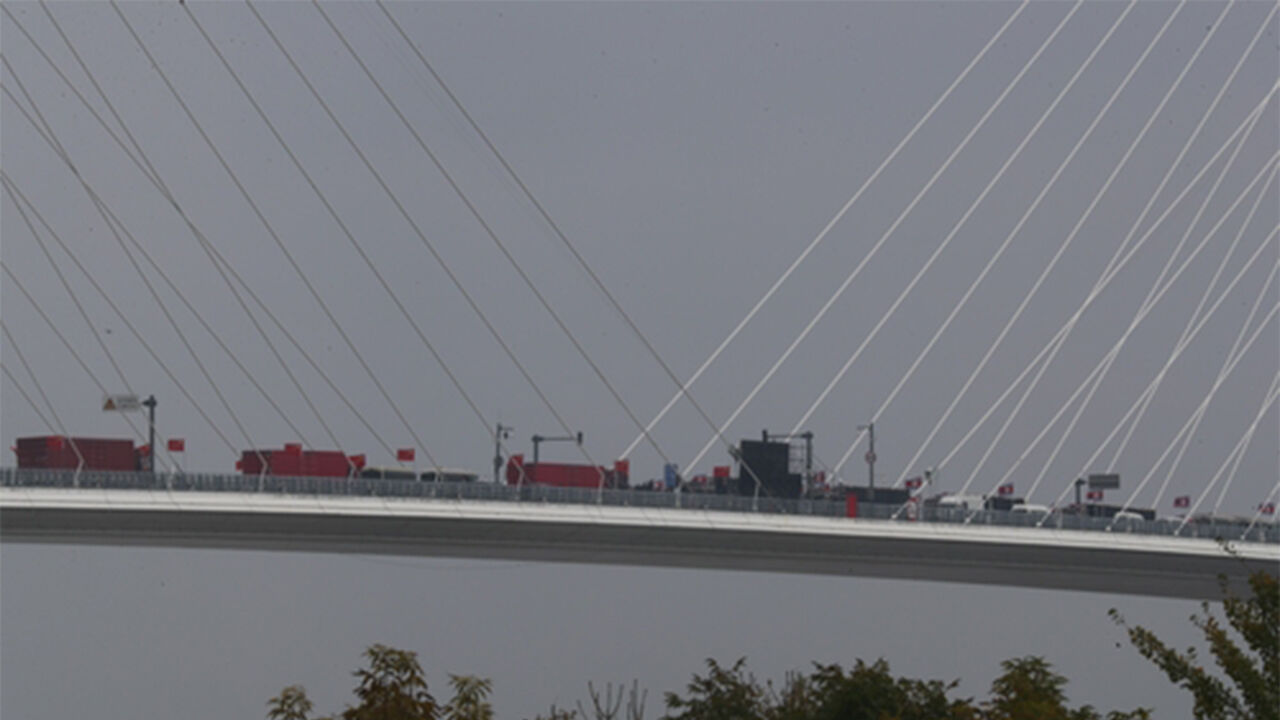
Summary The New Yalu River Bridge, connecting Dandong in China's Liaoning Province to Sinuiju in North Korea's North Pyongan Province, has officially opened to traffic 12 years after its construction was completed. Completed in 2014 at a cost of roughly 2.2 billion yuan (around 440 billion KRW) funded by China, the 3,026-meter, four-lane bridge had stood dormant for over a decade due to delayed construction of connecting roads and customs infrastructure on the North Korean side.
The opening ceremony marked a high-profile diplomatic moment, featuring video congratulatory speeches by Chinese Premier Li Qiang and North Korean Premier Pak Thae-song. Premier Li emphasized that the bridge represents a key cross-border infrastructure project jointly prioritized by Chinese President Xi Jinping and North Korean leader Kim Jong-un, framing it as a new landmark symbolizing traditional friendship between Beijing and Pyongyang. The opening signifies a notable warming of relations between the two nations following years of friction and diplomatic distance, especially after Pyongyang deepened its military and economic ties with Moscow amid the Ukraine conflict.
Tight security surrounded the opening event along Dandong's riverfront. Local authorities mobilized heavy police presence, restricted public access near border customs checkpoints, and instructed riverside hotels to draw curtains to prevent guests from viewing or photographing border developments. Giant national flags of both China and North Korea decorated the bridge checkpoints, underscoring the political gravity of the launch.
The bridge's opening carries geopolitical and economic weight, though analysts caution that immediate effects may remain focused on cargo and freight transport rather than full-scale personnel and tourist exchanges. Observers also point out concerns that expanded overland trade between China and North Korea could weaken the enforcement of existing United Nations Security Council sanctions, particularly following the dissolution of the UN Panel of Experts monitoring group in early 2024. Furthermore, commentators noted the symbolic timing: the opening took place exactly two years to the day after North Korea severed inter-Korean road connections along the Gyeongui and Donghae lines in 2024, highlighting the stark contrast in Pyongyang's relations with Seoul compared to its northern neighbors.
Sponsored · Ad