Nobel Prize in Chemistry Awarded to Henri Kagan and Kenso Soai for Breakthroughs in Molecular Homochirality
Key Points
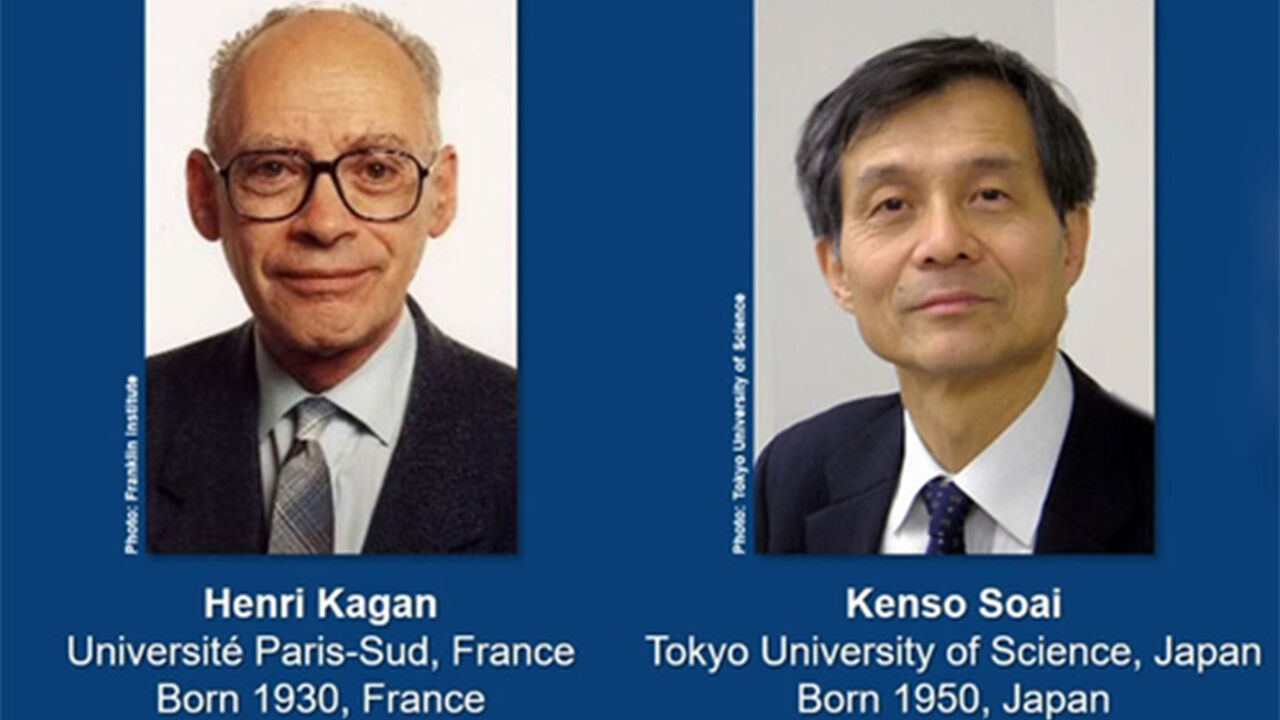
- Professors Henri Kagan and Kenso Soai were jointly awarded the 2026 Nobel Prize in Chemistry for discovering asymmetric autocatalysis and non-linear effects in organic synthesis.
- The announcement gained significant coverage in Korean news, highlighting that Japan has produced a Chemistry Nobel laureate for two consecutive years.
- Their work explains homochirality, solving a century-old mystery of how molecules essential to life spontaneously adopt uniform directional handedness.
Summary The 2026 Nobel Prize in Chemistry has been awarded to Professor Henri Kagan of the University of Paris-Sud and Professor Kenso Soai of the Tokyo University of Science. The Royal Swedish Academy of Sciences announced the honor in recognition of their pioneering discoveries concerning non-linear effects and asymmetric autocatalysis in organic synthesis.
Their breakthrough addresses one of the fundamental puzzles in modern molecular biology and chemistry: homochirality. Homochirality refers to the intriguing phenomenon where biological molecules exhibit a specific directional handedness—such as the left-handed amino acids and right-handed sugars that form the structural backbone of terrestrial life. According to Heiner Linke, Chair of the Nobel Committee for Chemistry, the laureates provided compelling answers to a century-old mystery by demonstrating how single-handed molecular structures can emerge spontaneously from initially balanced chemical systems.
In East Asian media and public discourse, scientific Nobel Prizes reliably draw intense interest, particularly when neighboring regional scientists are honored. South Korean outlets closely followed the Swedish Academy's announcement, noting with keen regional awareness that this marks the second consecutive year a Japanese researcher has received the Nobel Prize in Chemistry. Such announcements regularly stimulate public conversations across Korea regarding foundational scientific research, regional academic milestones, and international science education.
The two laureates will share the prize sum of 12 million Swedish kronor (approximately 1.61 billion Korean won). Their foundational research not only unlocks deeper answers into the chemical origins of biological life on Earth, but also offers vital insights for practical organic synthesis and pharmaceutical development worldwide.
Sponsored · Ad