Far-Left 'Black Bloc' Under Scrutiny as French Cost-of-Living Protests Turn Violent
Key Points
- Massive French anti-government protests drawing 500,000 people over education issues and living costs turned violent with arson, looting, and clashes.
- Korean international desks highlighted the suspected role of the masked, decentralized 'Black Bloc' tactic in driving the destruction.
- Rooted in 1980s European radical activism, the tactic relies on encrypted communications and black clothing to target institutional and commercial symbols without central leadership.
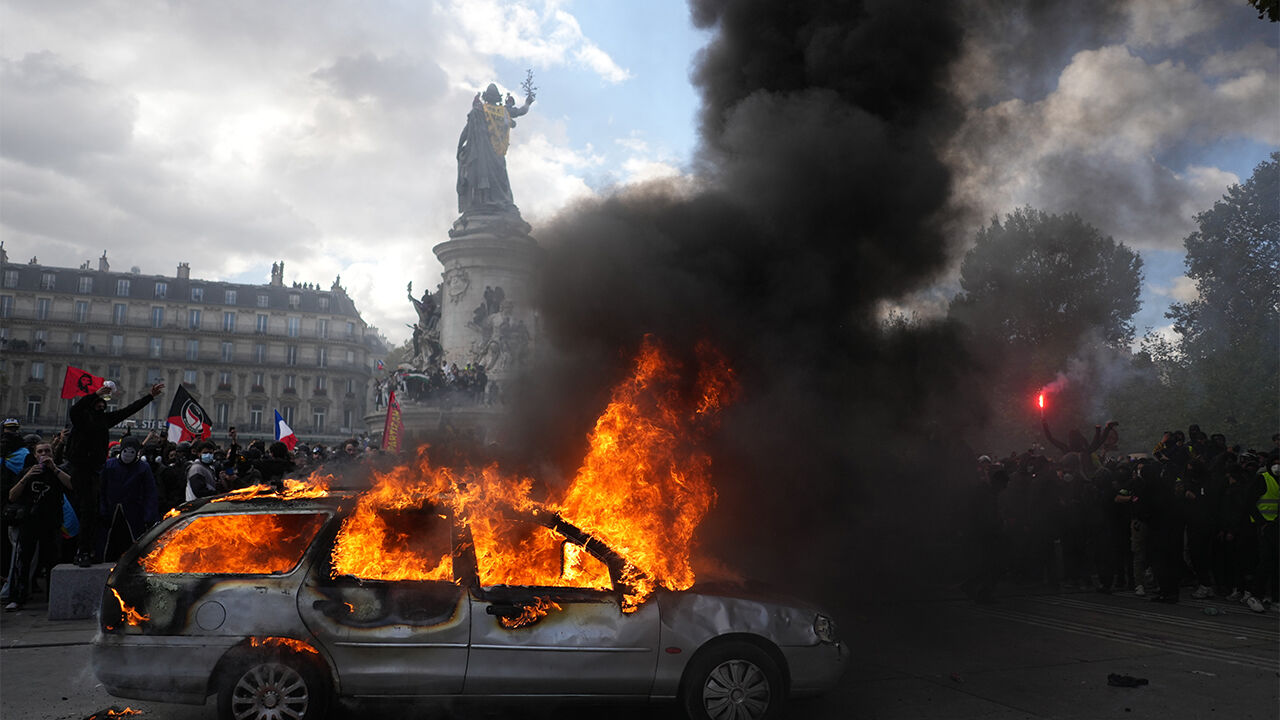
Summary A massive wave of anti-government demonstrations across France has escalated into widespread unrest and property destruction, with authorities pointing to the far-left tactical collective known as the 'Black Bloc' as the driving force behind the violence.
The nationwide demonstrations, which drew approximately 500,000 participants on October 17, originally began as high school student protests denouncing problems within the educational system before expanding to include ordinary citizens protesting soaring living costs. However, peaceful rallies quickly degenerated into riots and looting, with an estimated 3,000 storefronts damaged across the country and government landmarks targeted. In Paris, masked individuals hurled stones at police and set street fires hours ahead of the scheduled march at Place de la République, while in Limoges, the city hall was set ablaze, prompting the arrest of a 34-year-old monitored extremist.
Originating in 1980s West Germany and gaining traction during anti-globalization summits, the Black Bloc is not a formal political party but an anarchist and anti-capitalist protest tactic. Participants dress in uniform black clothing with concealed faces, attacking symbols of financial and state power while evading police identification. Because they coordinate spontaneously via encrypted messaging platforms without a centralized hierarchy, security forces face immense operational hurdles in containing them.
South Korean media outlets have closely tracked these developments, reflecting domestic interest in how European nations grapple with urban unrest, inflation protests, and digital-era civil mobilization. Experts note that as Black Bloc confrontation methods increasingly spill over to non-ideological, general demonstrators expressing deep social frustration, law enforcement faces systemic challenges in preventing routine civic assemblies from descending into chaos.
Sponsored · Ad