J.Y. Park Confronts Public Scrutiny Over State-Backed K-Pop Awards Trademark and Role Stipends Ahead of Parliamentary Audit
Key Points
- JYP Entertainment founder and presidential committee co-chair J.Y. Park defended himself on radio against accusations regarding trademark ownership of the state-supported 'FANOMENON' K-pop awards and
- The dispute gained national attention after lawmaker Bae Hyun-jin questioned potential private profiteering from public funds, prompting Park to voluntarily testify as a sworn witness at the National
- The controversy highlights the complex tensions in South Korea's public-private partnerships, where entertainment titans collaborate with the government to promote Hallyu abroad while facing intense l
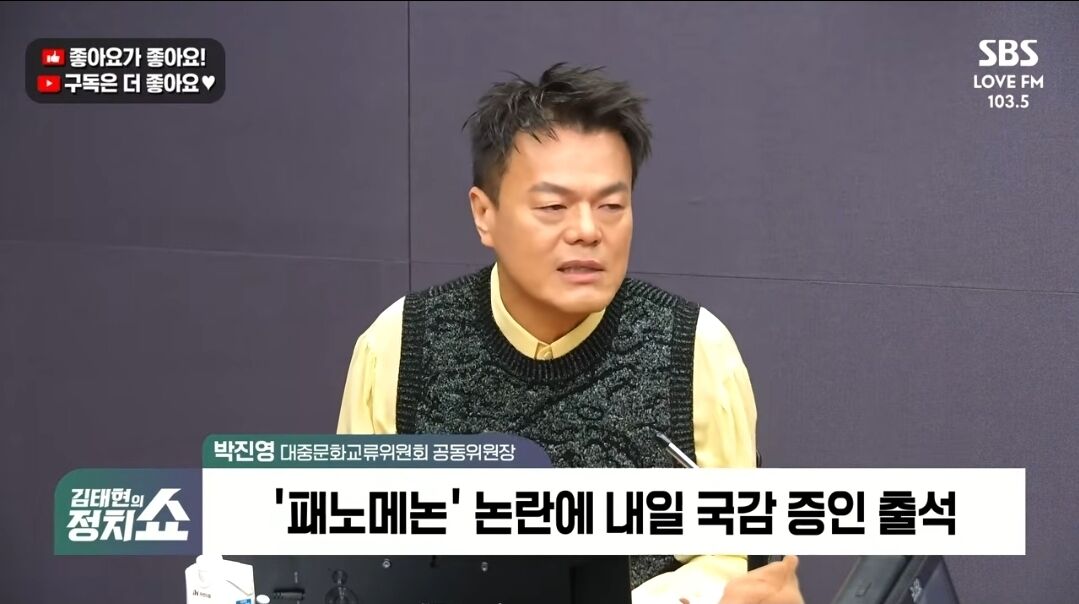
Summary Park Jin-young (J.Y. Park), founder of JYP Entertainment and co-chair of the Presidential Committee on Popular Culture Exchange, has directly addressed growing controversies surrounding his public role just one day before testifying at South Korea's annual parliamentary audit (Gukjeong Gamsa). Appearing on SBS Radio's "Kim Tae-hyun's Political Show," the veteran producer and mogul pushed back against allegations of self-enrichment, explaining that his greatest hardship has been having his genuine dedication to public service questioned.
The controversy began when People Power Party lawmaker Bae Hyun-jin raised questions over JYP Entertainment exclusively filing trademark rights for "FANOMENON," a government-backed global K-pop awards ceremony. Critics questioned why a private agency was holding rights to a state-supported project. In response, Park clarified that trademarking overseas incurs steep costs—upwards of 600 to 700 million KRW (around $450,000–$500,000)—and required immediate registration before external squatters could claim the name. Because JYP possessed an established intellectual property legal team, Park stated he advanced his own money to secure the rights with the explicit plan to transfer them to a joint venture established by the "Big Four" K-pop agencies (HYBE, SM, YG, and JYP). To prevent private monopolization, the trademark ownership will be shared equally with the government, backed by public-interest covenants.
Park also addressed allegations regarding his compensation. While he had previously stated he would serve in his ministerial-level position without pay, parliamentary records revealed he received approximately 2 million KRW per month in role execution stipends, totaling over 20 million KRW. Park stated he was unaware the stipends were being deposited and acknowledged he would prefer to return the money. However, he warned that refusing the legal stipend might establish an unrealistic precedent that prevents future civilian experts from serving in government roles, pointing to structural friction in public-private partnerships. Addressing further scrutiny over conducting agency work during an official overseas trip to the United States, Park noted that strict bureaucracy often discourages creative leaders from participating in state affairs.
In South Korea, the Gukjeong Gamsa (parliamentary audit) is an intense annual legislative review where lawmakers grill public officials and high-profile witnesses under intense media scrutiny. Park emphasized that he specifically volunteered to appear as a formal "witness" rather than an "informant" (reference person). Under Korean law, formal witnesses take a legal oath and face criminal perjury charges if dishonest, a decision Park said he made deliberately so the public would trust his word.
Sponsored · Ad