Inside China's 'City of the Millennium': AI Roads, No Skyscraper, but Where Are the People?
Key Points
- A Korean correspondent toured Xiong'an New Area, reporting state-of-the-art smart city infrastructure, subterranean utilities, and AI-assisted roadways built with massive state backing.
- Despite commanding hundreds of billions of dollars and mandated transfers of major state enterprises and universities from Beijing, the city currently struggles with low resident density and empty str
- Unlike Shenzhen or Pudong, Xiong'an strictly caps building heights to protect local wetlands, aiming to balance high-tech research hubs with strict environmental preservation.
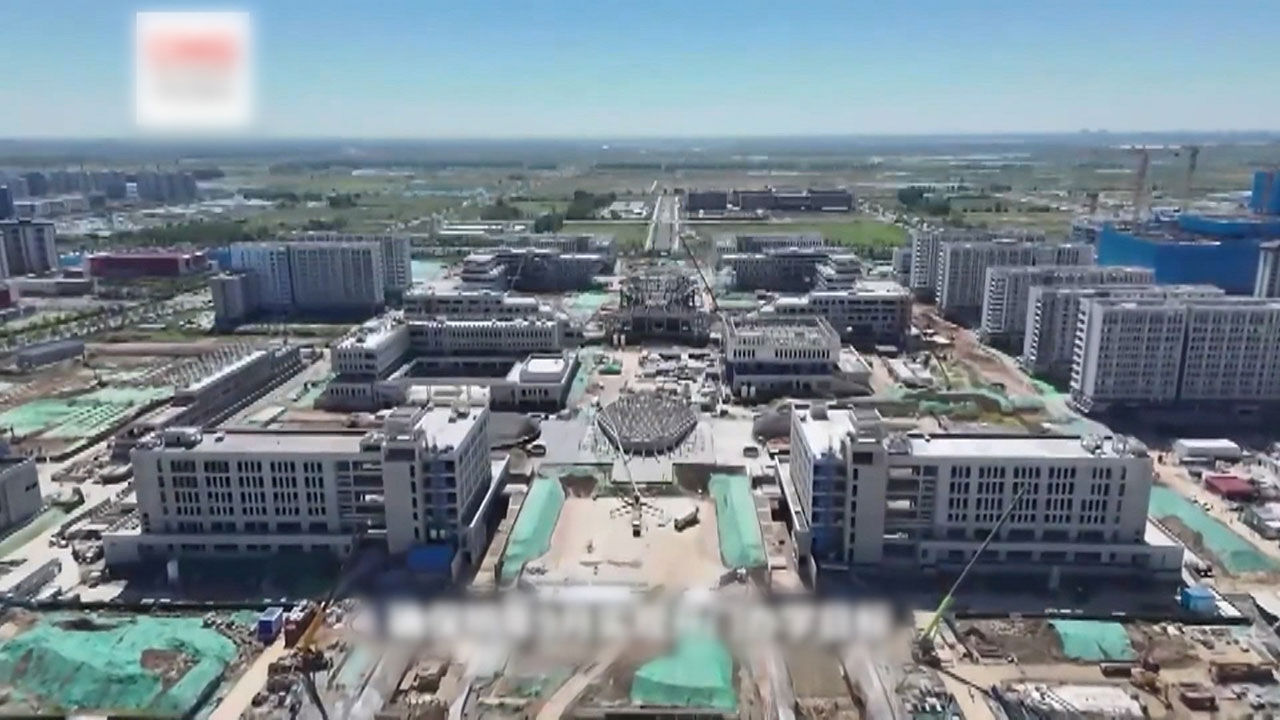
Summary A firsthand look inside Xiong'an New Area—Chinese President Xi Jinping's flagship 'millennium project' designed to relieve Beijing's congestion—reveals cutting-edge smart city infrastructure that currently looks like a modern ghost town.
Located in Hebei Province roughly two hours south of Beijing, Xiong'an represents the third major state-led planned metropolis in contemporary Chinese history, following Deng Xiaoping's Shenzhen and Jiang Zemin's Shanghai Pudong. However, Xiong'an departs sharply from its predecessors' towering skylines. To preserve the adjacent Baiyangdian wetland ecosystem, all buildings are strictly capped at 45 stories. The city operates on a three-tier design: human-centered parks and green spaces above ground, public utilities and logistics buried entirely subterranean, and autonomous driving sensors and AI traffic grids managed in real time via Internet of Things (IoT) data.
To seed the city, Chinese authorities have mandated the relocation of massive state-owned enterprise headquarters—such as China Huaneng Group, Sinochem, and China Satellite Network—alongside campuses for more than 20 prominent Beijing universities, including Beijing Jiaotong University and Beijing University of Science and Technology. Entire cohorts of undergraduate and graduate students are slated to move as complete units rather than gradually.
Despite an investment of approximately 200 trillion Korean won over the past decade and plans for 800 trillion won more, Xiong'an faces a critical hurdle: its streets remain eerily deserted. While Beijing residency permits (hukou) grant equivalent access to healthcare and education in Xiong'an, this policy also allows workers and faculty to commute back to Beijing on weekends. Observers note that while state administrative orders can build roads and relocate institutions, turning a futuristic tech hub into a thriving, self-sustaining community will require organic private sector growth, deregulation, and superior living conditions.
Sponsored · Ad