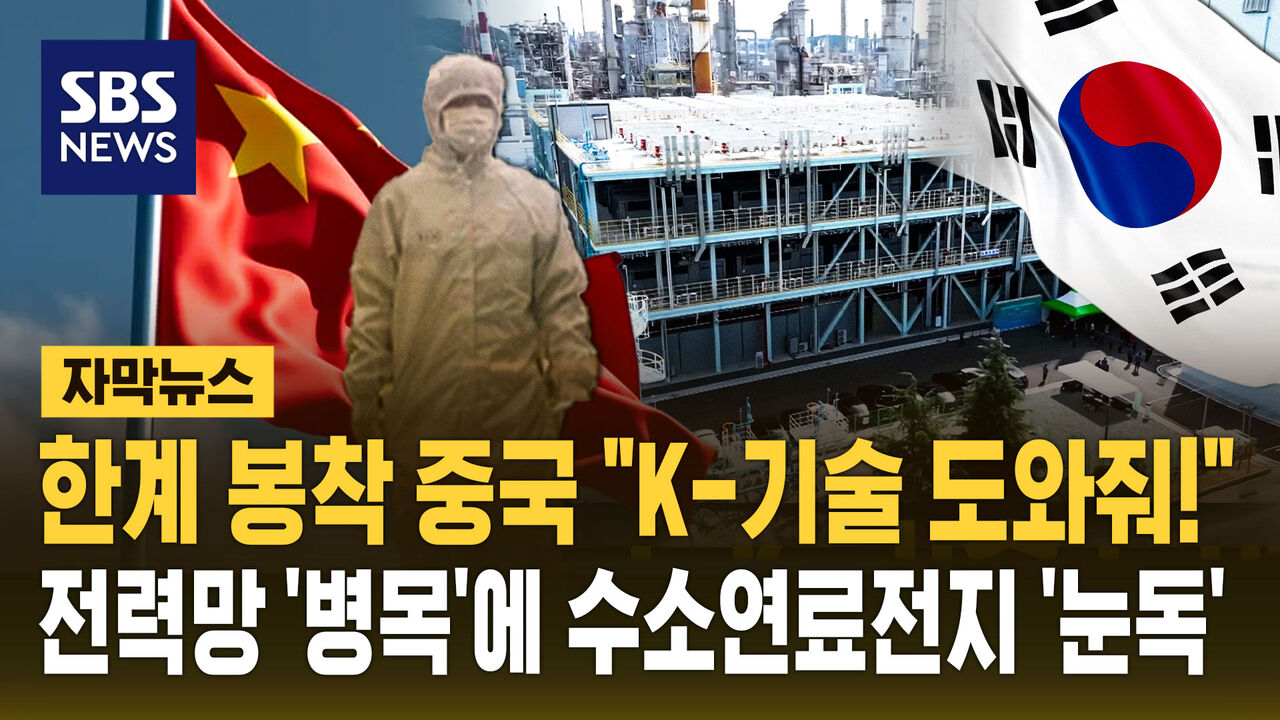
China Looks to Korean Fuel Cell Tech to Break AI Power Grid Bottleneck
Key Points
- Explosive growth in AI data centers is outpacing electrical grid construction in both China and the U.S., creating severe regional power supply bottlenecks.
- Industry analysts highlight that South Korea's proven track record of deploying over 1 gigawatt of stationary fuel cells offers critical mass-production know-how that neighboring markets currently lac
- On-site solid oxide fuel cells (SOFC) provide a decentralized power alternative, bridging the gap between China's raw material strengths and Korea's advanced system integration.
Summary As artificial intelligence data centers mushroom worldwide, a major global bottleneck has emerged: power grids simply cannot expand fast enough to feed the energy-hungry facilities. Building an AI data center typically takes between eight months and two years, but constructing the high-capacity power lines and infrastructure to supply them requires five to ten years or more. While governments like the United States are investing billions of dollars to ease transmission bottlenecks, China is confronting an acute geographical dilemma: renewable generation facilities are situated largely in the remote western interior, while massive AI computational demand is clustered along the eastern coast.
To overcome the lag of building cross-country grid transmission lines spanning thousands of kilometers, energy planners are turning toward distributed on-site generation. Solid Oxide Fuel Cells (SOFC) have emerged as a premier decentralized solution, capable of converting fuel's chemical energy directly into steady electricity right next to AI server hubs before macro-grid buildouts are completed.
In this high-stakes technological race, Beijing's industry observers are casting an appreciative eye across the Yellow Sea at South Korea's proven engineering prowess. A recent analysis from the Carbon Neutrality & ESG Research Center at Beijing Jinmen Law Firm highlighted that while Chinese manufacturers possess strong cost advantages in raw materials and chemical processing, they lag behind in the practical mass production and long-term operating stability of integrated commercial fuel-cell systems.
In contrast, South Korea has installed over 1 gigawatt of cumulative stationary fuel cell capacity, accumulating unmatched operational experience in system integration, long-duration stability, and routine maintenance under real-world conditions. This track record makes Korean hydrogen and fuel cell specialists attractive prospective partners for China's expanding tech sector, potentially pairing China's raw mineral and component supply chain with Korea's proven industrial hardware to power the next generation of artificial intelligence.
Sponsored · Ad