Teenagers Under Police Investigation After Controlling Humanoid Robot to Harass Girl in Cologne
Key Points
- Two teenagers in Cologne, Germany, were apprehended after allegedly using a remote-controlled humanoid robot to inappropriately touch a 16-year-old girl and broadcast the act on social media.
- The story captured attention in Korea as a prime example of the legal challenges and moral hazards that arise when consumer humanoid robotics intersect with public spaces.
- German authorities are currently pursuing 'sexual insult' charges because traditional harassment statutes require direct human-to-human physical contact, igniting debate over treating robots as extend
Summary A startling incident in Cologne, Germany, has sparked intense debate across international media and Korean digital outlets after teenagers allegedly remote-controlled a humanoid robot to grope a 16-year-old girl while livestreaming the encounter on social media.
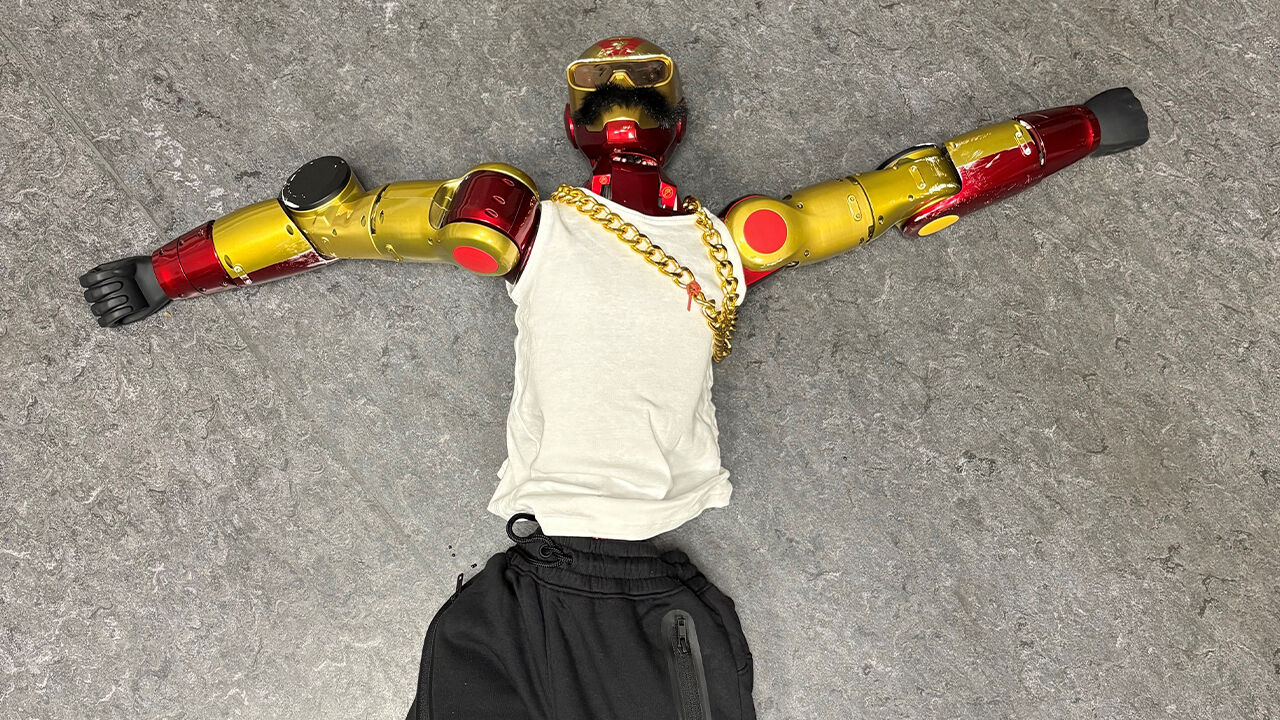
According to German police reports covered by Korean broadcaster SBS, the incident occurred late on a Saturday night around midnight in a busy downtown district of Cologne. A 16-year-old girl was standing with two friends when a humanoid robot—measuring approximately 120 cm tall and bearing a striking resemblance to Iron Man with its red-and-gold color scheme—approached her from behind. The robot reportedly made unwanted physical contact with her buttocks and repeatedly performed gestures with explicit sexual connotations. Shocked and distressed, the teenager quickly fled the scene.
Shortly after receiving the report, Cologne police tracked down the perpetrators near the scene and seized the robot from the trunk of a car along with two smartphones. The suspects were identified as a 16-year-old boy, who owned the robot, and a 19-year-old accomplice. The duo faces allegations of deliberately orchestrating the act and broadcasting it live across social media channels for views and viral attention. While authorities have not officially named the robot model, observers noted its physical build and mechanics closely resemble the Unitree R1, a compact consumer humanoid produced in China.
The case has exposed a significant legal gray area surrounding robotics and harassment laws. Cologne police initially charged the suspects with "sexual insult" rather than statutory "sexual harassment." Under Section 184i of the German Criminal Code, sexual harassment charges traditionally hinge on direct physical contact between human bodies, based on a 2021 Federal Court of Justice interpretation stating that contact must occur directly between perpetrator and victim. German legal experts are now sharply divided: some argue that existing statutes do not cover indirect contact mediated through machines, while others insist that a remote-controlled robot acts as an "extended physical tool" or mechanical arm of the human operator.
The report also contrasts this case with a March 2024 controversy in Riyadh, Saudi Arabia, where a humanoid robot named Muhammad appeared to touch a female reporter's jacket during a live broadcast. While that incident was attributed to autonomous navigation and mechanical error, the Cologne case represents intentional human misconduct using advanced robotics as a weapon.
Korean commentators and tech analysts are following the controversy closely as autonomous delivery bots and personal robots increasingly enter urban spaces worldwide. The case highlights an urgent global challenge: while robotic technology is rapidly integrating into daily life, legal frameworks built strictly around person-to-person interactions must evolve to ensure human controllers cannot hide behind machines.
Sponsored · Ad