Chicago Cubs Win Court Order Halting $1M-a-Year Wrigley Rooftop Viewing Business
Key Points
- A U.S. federal court ordered 64-year-old business owner Aiden Dunican to stop selling rooftop tickets overlooking Wrigley Field after a lawsuit by the Chicago Cubs.
- The dispute gained attention in Korean media as Dunican, the last independent rooftop holdout who netted over $1 million annually, clashed with the club over surging royalty demands.
- Built in 1914 within a Chicago residential neighborhood, Wrigley Field spawned a unique multi-decade rooftop viewing industry that the Cubs have gradually consolidated under team ownership.
Summary A long-standing legal battle between Major League Baseball's Chicago Cubs and an independent rooftop business owner across Wrigley Field has culminated in a federal court ruling ordering ticket sales to stop, capturing wide interest among sports fans in South Korea. On September 30, a U.S. federal court ordered 64-year-old Aiden Dunican to halt sales of rooftop bleacher admissions overlooking Wrigley Field's outfield wall, handing the Cubs a major legal victory.
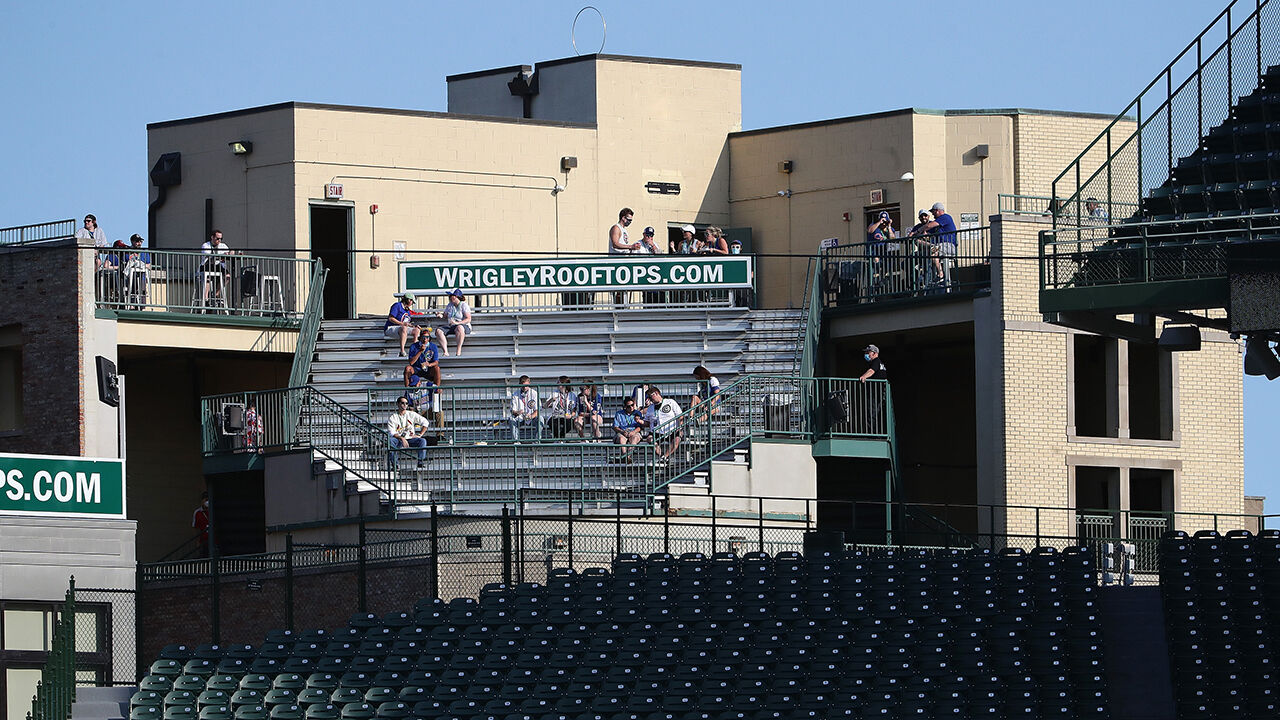
Dunican bought the property facing Wrigley Field's outfield fence in the 1990s for $400,000 and reconstructed it into a four-story building. By adding tiered bleachers on the roof that accommodated roughly 200 spectators and offering all-inclusive admission with food and alcoholic beverages priced between $100 and $300 per ticket, he generated annual revenues of around $1 million (approx. 1.34 billion KRW). Originally, the business operated under a 20-year agreement struck with the Cubs in 2004, under which Dunican paid about 17% of revenues to the club.
When that agreement expired at the end of 2023, negotiations collapsed. While Dunican offered to renew the contract at a 20% revenue share, he claimed the Cubs demanded 30% of regular-season revenue and 40% of postseason revenue. The Cubs subsequently sued in 2024, asserting that profiting from viewing their baseball games requires team authorization. The club also installed translucent screens and giant video billboards in the outfield stands, partially obstructing the view from Dunican's rooftop.
For Korean baseball fans, this historic quirk of Wrigley Field—constructed in 1914 in a dense urban neighborhood—stands in stark contrast to modern KBO League stadiums, which are municipal facilities rarely bordered directly by residential rooftops. While the Cubs have gradually purchased 11 surrounding rooftop properties to control spectator viewing or signed new revenue splits, Dunican remained the final independent holdout. Dunican, who spent over $2 million remodeling the building in 2010, is considering an appeal but noted he remains open to selling the property to the Cubs if given a fair offer.
Sponsored · Ad