A Murderer’s Letter Unearths the Horrors of Busan's State-Sanctioned Detention Facilities
Key Points
- An investigative TV episode revealed a letter from a life-sentence inmate who recounted how he was abducted and systematically trained into crime at Busan's Yeonghwaduk and Jaesaengwon facilities in t
- The story is resonating strongly in South Korea as it highlights the dark legacy of state-led 'social purification' campaigns and the institutional abuse that preceded the infamous Brothers Home scand
- Despite surviving victims recently winning state damages, the deep trauma and structural failure of accountability during the authoritarian era continue to spark nationwide reflection.
Summary The popular South Korean investigative documentary program *Unanswered Questions: Tales of the Tail* (known colloquially as *Kkokkomu*) recently brought national attention to a chilling chapter of Korean modern history through a letter sent directly from behind bars. The sender, a convicted murderer currently serving a life sentence identified as Gyeong-ho, reached out to producers not to beg for forgiveness, but to reveal how his life was systematically dismantled by Busan’s notorious Yeonghwaduk and Jaesaengwon facilities during the 1960s.
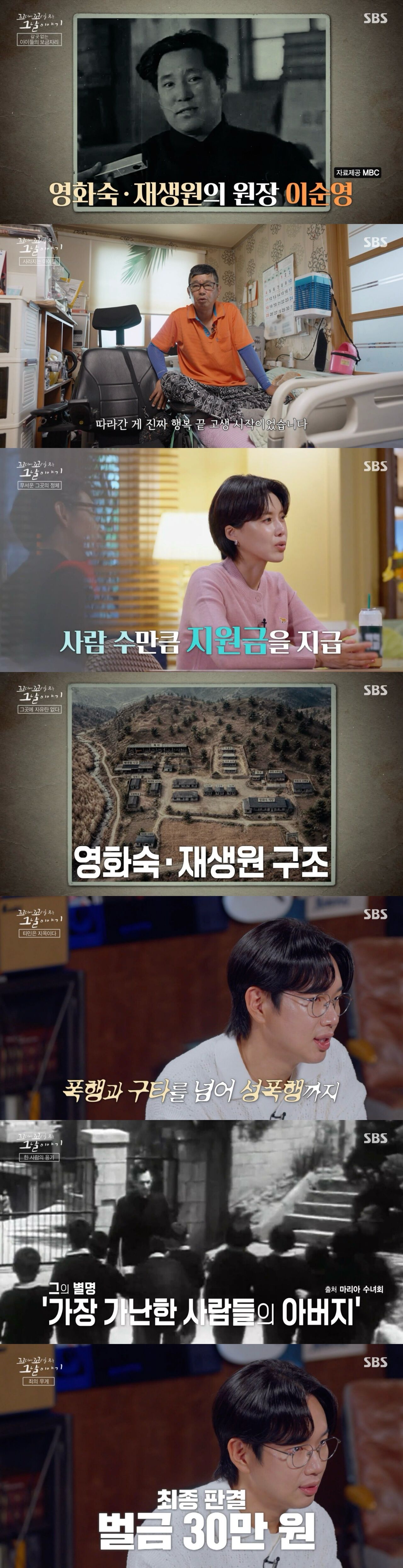
During the Park Chung-hee administration in the 1960s and 1970s, South Korea underwent rapid state-led modernization accompanied by aggressive "social purification" drives designed to clear city streets of vagrants, orphans, and the homeless. In Busan, municipal authorities contracted facility director Lee Soon-young to round up individuals. Instead of providing welfare, the institution conducted illegal abductions of ordinary citizens and children, detaining those under 18 at Yeonghwaduk and adults at Jaesaengwon to secure state subsidies and exploit unpaid forced labor.
Inside, detainees were subjected to horrific living conditions, sleeping in rooms covered with human waste, facing constant surveillance, military-style discipline, severe malnutrition, physical beatings, and sexual abuse. Deceased victims were secretly buried in nearby reed fields. The facility further corrupted its young captives by turning victims into perpetrators, forcing children to recapture escapees and actively training them in theft, burglary, and narcotics delivery. Gyeong-ho recounted that the institution functioned as a "crime academy," leading to his juvenile detention—which felt like liberation compared to the abuse inside—before he was forced back and eventually spiraled into a life of crime, ending in murder.
Although American Catholic priest Father Aloysius Schwartz campaigned tirelessly against the horrors, alerting top government officials and briefly securing Lee's arrest before the city contract was terminated in 1971, Lee escaped meaningful accountability, receiving only a minor fine while retaining illicit wealth. Displaced victims were subsequently funneled into other notorious institutions such as the Brothers Home (Hyungje Bokjiwon) and the Samcheong Re-education Camp. Today, surviving victims have won state compensation lawsuits, yet the lifelong psychological devastation remains irreparable, echoed by Gyeong-ho’s final wish to recover the buried victims and donate any potential victim compensation to welfare programs.
Sponsored · Ad