Typhoon Champi Leaves Path of Destruction Across Taiwan and Okinawa as Heavy Rain Hits Japan
Key Points
- Typhoon Champi caused widespread damage, blackouts, and injuries across Okinawa and Taiwan before tracking past Jeju Island toward mainland Japan.
- The storm broke October rainfall records on Tsushima Island and prompted Okinawa authorities to request Self-Defense Forces assistance.
- Moisture from the weakening storm continues to trigger severe rain and landslide warnings across Kyushu, Shikoku, and the Kanto region.
Summary A severe autumn weather system brought widespread disruptions and damage across East Asia as Typhoon Champi swept near Taiwan and Japan's southwestern islands before tracking past the seas south of South Korea's Jeju Island. Even as the system transitioned into an extratropical cyclone overnight, meteorologists and regional authorities remained on high alert due to torrential rainfall and strong gales threatening mainland Japan.
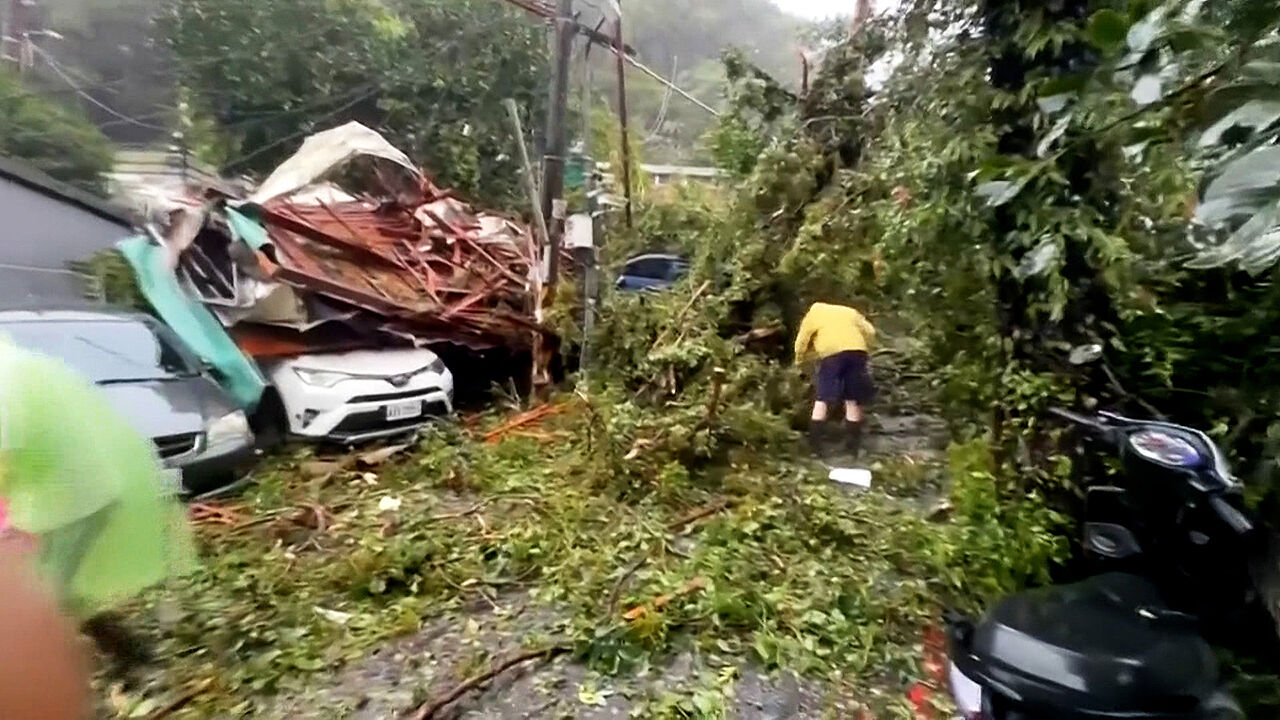
The Okinawa prefecture bore the brunt of the storm's initial fury. On Ishigaki Island, destructive winds toppled power poles onto roadways and snapped mature roadside trees. Injuries were reported across neighboring islands: on Miyako Island, a woman in her 70s suffered bone fractures after being knocked over by gale-force winds, while a seven-year-old child on Yonaguni Island sustained head injuries from shattered window glass. In total, approximately 13,000 households lost electrical power, and localized disruptions to running water prompted the Okinawa prefectural government to formally request disaster relief assistance from Japan's Self-Defense Forces.
Prior to reaching the Ryukyu Islands, the storm wreaked havoc across Taiwan, where towering ocean swells swept one person to their death and left more than 500 individuals injured. Residents in Taipei recounted harrowing conditions, with urban wind gusts clocked at 70 to 80 kilometers per hour causing widespread panic.
South Korean and Japanese meteorological authorities highlighted that the storm's warm, moisture-laden air continues to stimulate stationary weather fronts stretched across the Japanese archipelago. Northern Kyushu and Shikoku are braced for up to 200 mm of downpours within a 24-hour window, with Southern Kyushu expecting up to 150 mm and significant rainfall slated for the Kanto metropolitan region, including Tokyo. Notably, Tsushima Island in Nagasaki Prefecture shattered all-time October precipitation records after recording over 200 mm of rain within 24 hours. Disaster management officials urge ongoing vigilance against landslides, localized flash floods, and secondary structural hazards across the region.
Sponsored · Ad