Beyond Traditional Ties: Why Experts Warn South Korea Can No Longer Rely on 'Alliance' Rhetoric Alone with Washington
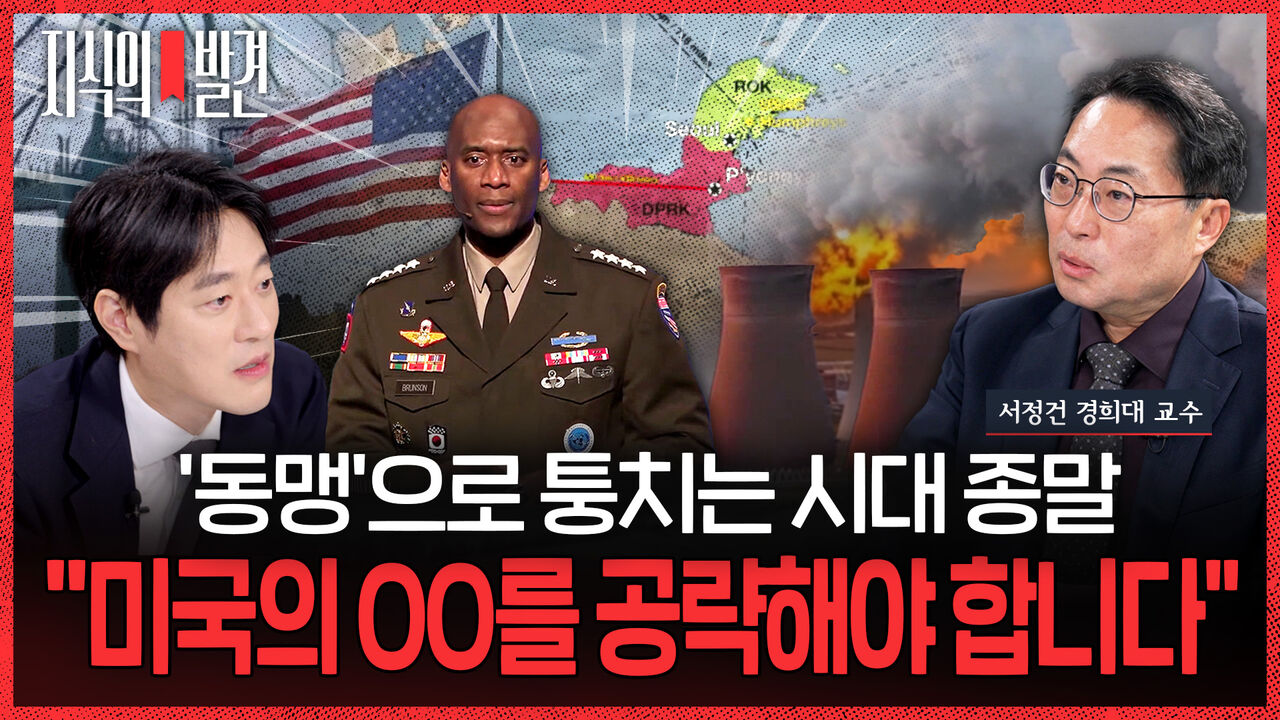
Key Points
- Appearing on SBS's 'Discovery of Knowledge,' Kyung Hee University Professor Seo Jung-kun argued that relying vaguely on traditional alliance ties is no longer enough following recent U.S. political sh
- The analysis garnered attention in Korea for highlighting the limits of congressional oversight on executive defense decisions like wartime operational control and tech policy.
- The discussion used the everyday Korean expression 'tungchida' (gloss over or lump together) to illustrate why Seoul needs a precise, granular lobbying strategy toward Washington.
Summary In a featured interview on SBS's in-depth program "Discovery of Knowledge" (지식의 발견), Professor Seo Jung-kun of Kyung Hee University's Department of Political Science and International Relations offered a pointed reassessment of South Korea–U.S. diplomacy following a major shift in the U.S. midterm elections.
Professor Seo argued that Seoul can no longer rely on the vague rhetorical shield of traditional "alliance" solidarity alone. Using the colloquial Korean idiom "tungchida" (퉁치다)—meaning to gloss over, settle casually, or lump things together without careful accounting—the discussion emphasized that simply citing historical alliance ties is no longer sufficient to navigate Washington's evolving political landscape. Instead, South Korea must adopt a far more granular, targeted strategy that engages specific structural leverage points within the American system.
The analysis tackled several pressing diplomatic, economic, and security fronts. In the realm of cutting-edge technology and artificial intelligence regulation, Seo highlighted China as a critical variable influencing U.S. regulatory and trade policies. Furthermore, the discussion examined the practical limits of U.S. Congressional oversight when it comes to executive-driven foreign and security policies, particularly on sensitive bilateral defense matters like the transition of wartime operational control (OPCON / 전작권 전환).
The program also addressed broader geopolitical challenges that carry direct consequences for South Korea's economy and national security, including shifting Washington–Pyongyang relations and instability surrounding the war in Iran. By underscoring the gap between general diplomatic rhetoric and hardline legislative realities, the segment urged Korean policymakers to recalibrate their approach to Washington with strategic precision rather than broad assumptions of allied goodwill.
Sponsored · Ad