Building Boom in Himalayan Flood Zones Surges 46% in Seven Years, Putting Nearly 300,000 at Risk
Key Points
- An international research team found that building footprint within high-risk Himalayan river channels grew 45.75% from 2016 to 2023.
- South Korean media covered the study prominently as part of growing international reporting on climate-driven natural disaster threats.
- Shrinking glaciers and expanding glacial lakes pose severe risks of catastrophic outburst floods to roughly 290,000 downstream residents across Nepal, India, and China.
Summary A comprehensive scientific study published in the journal Scientific Reports has revealed a sharp increase in human settlement and construction within high-risk flood zones across the Himalayas. Led by Dr. C. Scott Watson of the University of Leeds, an international research team investigated mountain regions across Nepal, India, and China (Tibet), discovering that total building area situated within a 50-meter vertical elevation of river channels surged by nearly 46% between 2016 and 2023.
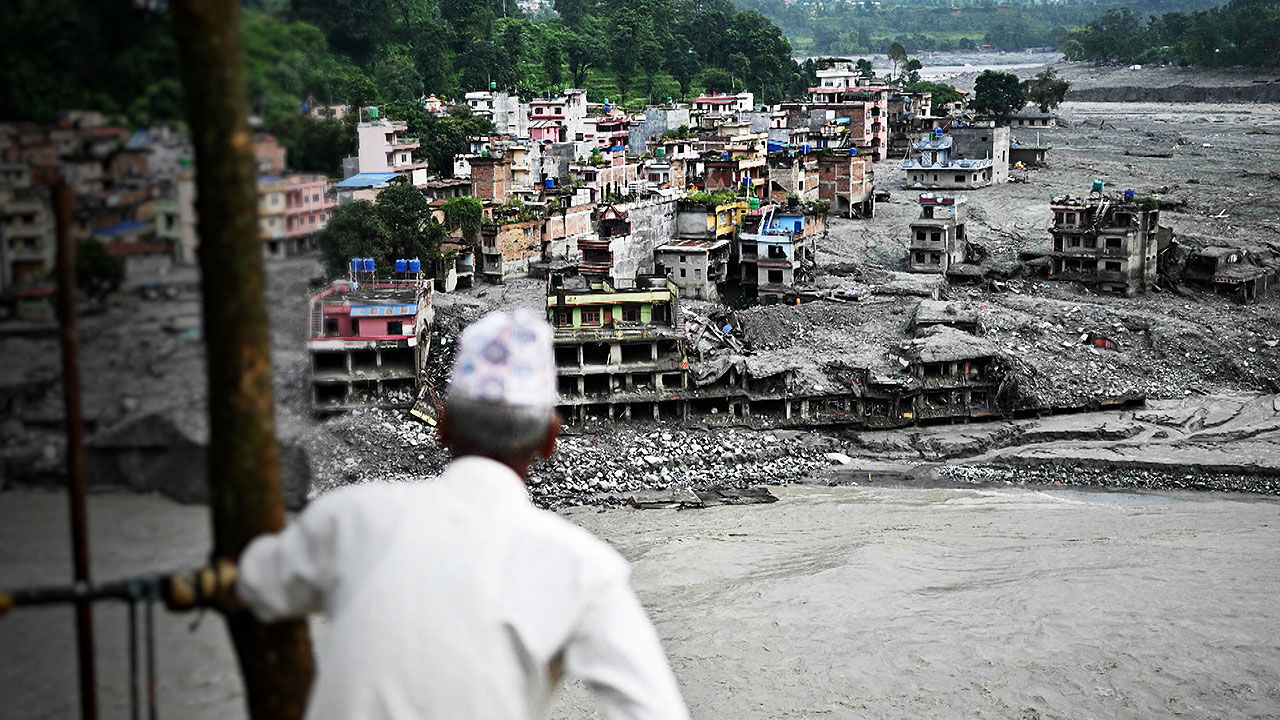
The Himalayan mountain system is exceptionally vulnerable to extreme weather and the impacts of global climate change. Rising regional temperatures have accelerated the melting of glaciers, leading to the formation and expansion of fragile glacial lakes. These bodies of water pose serious risks of Glacial Lake Outburst Floods (GLOFs)—catastrophic events where natural dams fail, sending massive torrents of water and debris crashing down steep mountain valleys. Even non-GLOF heavy precipitation and shifting monsoon patterns can trigger destructive flash floods and debris flows, as demonstrated by severe inundations that recently struck Nepal's Nuwakot district.
By tracking satellite datasets—specifically utilizing Google Open Buildings Temporal 2.5D alongside multiple public datasets across 1,361 glacial lakes and their downstream paths—researchers found that building coverage within 50 vertical meters of waterways jumped from 12.38 square kilometers in 2016 to 18.04 square kilometers in 2023. Even more alarming, built-up areas directly inside potential GLOF inundation zones expanded by approximately 77% over the same seven-year span.
Currently, an estimated 293,800 people live within these hazardous 50-meter vertical zones, accounting for about 18% of the total basin population in the surveyed Himalayan areas. Nepal faces an acute threat, with roughly 108,500 residents living along potential outburst flood paths within the 50-meter threshold, and more than 22,800 people living within an extremely vulnerable 10 vertical meters. Demographers project that by 2030, an additional 17,900 people will settle in these flood-prone mountain zones.
In South Korea, international environmental crises and climate vulnerability reports receive significant attention from major broadcasters like SBS, reflecting growing domestic awareness of global climate disruptions and natural disaster preparedness. The research team emphasized that as human activity and infrastructure rapidly push into high-altitude riverbanks, enhancing real-time population data, upgrading early warning networks, and enforcing stricter mountain land-use regulations will be crucial to preventing devastating loss of life.
Sponsored · Ad